
⚡ Quick Answer
A fan coil thermostat is a wall-mounted control device that manages a fan coil unit (FCU) to heat or cool a room. It reads the room temperature, then automatically adjusts the fan speed and water valves to hit your desired setpoint. It is widely used in hotels, offices, hospitals, and apartments for quiet, zoned comfort.
| Topic | Fast Fact |
|---|---|
| What it is | A smart control device for fan coil units (FCUs) |
| How it works | Senses room temp → controls fan speed + water valves |
| Main types | Non-programmable, programmable, digital, smart/Wi-Fi |
| Energy savings | Up to 50%+ fan energy reduction with modulation control |
| Best for | Hotels, offices, condos, hospitals, apartments |
What Exactly Is a Fan Coil Thermostat?
A Simple Definition
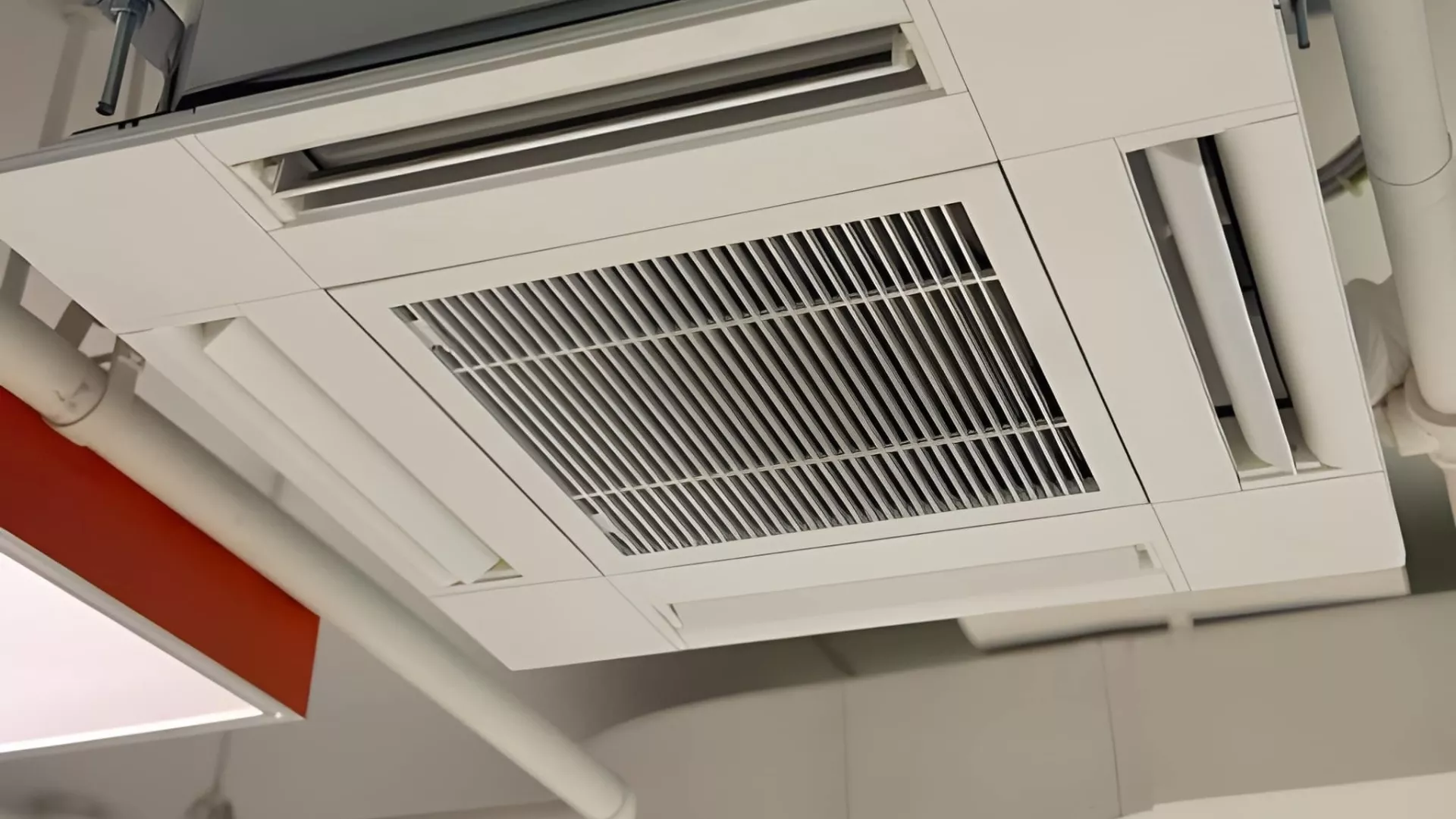
Simply put, a fan coil thermostat is a specialized control device. It manages a fan coil unit, which is a compact heating and cooling machine installed in a room. The thermostat acts as the “brain” — it reads the room temperature and tells the FCU exactly what to do.
Unlike a regular home thermostat, a fan coil thermostat controls both fan speed and water valves. This gives you much more precise comfort control. Furthermore, it works with a central chiller or boiler system, rather than a standalone AC unit.
Where Is It Commonly Used?
Fan coil thermostats are everywhere — you just might not have noticed them. They are commonly found in:
- 🏨 Hotels — individual room temperature control for guests
- 🏢 Office buildings — zoned comfort for different floors or rooms
- 🏥 Hospitals — precise climate control for patient comfort
- 🏠 Condos and apartments — quiet, efficient heating and cooling
Because they work without full ductwork, they are especially popular in older buildings and high-rise retrofits. As a result, installation is faster and more affordable compared to traditional ducted HVAC systems.
How Is It Different from a Regular Thermostat?
This is a great question. A standard thermostat simply switches a furnace or air conditioner on or off. However, a fan coil thermostat does much more — it manages fan speeds (low, medium, high) and opens or closes water valves at the same time. Therefore, it delivers much finer temperature control in each individual room or zone.
“Fan coil systems with smart thermostats represent the most practical path to zoned comfort in multi-room buildings. The thermostat is not just a switch — it is an intelligent controller that dramatically improves both comfort and efficiency.”
— John Mitchell, Senior HVAC Systems Engineer, ASHRAE Member
How Does a Fan Coil Thermostat Work?
The Simple Step-by-Step Process
Understanding how a fan coil thermostat works is actually quite straightforward. Think of it like a smart referee — it constantly watches the game and makes calls to keep everything balanced. Here is exactly what happens, step by step:
- Sense: The built-in sensor reads the current room temperature.
- Compare: It compares that reading to your desired setpoint — for example, 22°C (72°F).
- Signal: If the room is too warm or too cold, it sends a signal to the FCU.
- Act: The FCU turns on its fan and opens the water valve to let chilled or hot water flow through the coil.
- Condition: Room air passes over the coil, gets heated or cooled, and blows back into the room.
- Adjust: The thermostat keeps monitoring and fine-tunes fan speed until the setpoint is reached.
Manual vs. Automatic Control
Most thermostats let you choose between manual and automatic fan control. In manual mode, you pick the fan speed yourself — low, medium, or high. In auto mode, the thermostat decides the best speed based on how far the room temperature is from your setpoint. As a result, auto mode is generally more energy-efficient.
Modern Digital Models: Smarter Control
Today’s digital fan coil thermostats use PID algorithms (Proportional-Integral-Derivative). Do not worry about the technical name — it simply means the thermostat makes tiny, continuous adjustments instead of just switching on and off. This results in a much more stable and comfortable room temperature. Moreover, modern models often show the current temperature, setpoint, and fan mode clearly on a digital display.
Fan Coil Unit vs. Thermostat — What’s the Difference?
The “Brain vs. Body” Analogy
Here is the easiest way to think about it. The fan coil unit (FCU) is the body — it does all the physical work of moving and conditioning air. The thermostat is the brain — it makes all the decisions and sends instructions to the body. Without the brain, the body runs blindly. Together, they deliver precise, efficient comfort.
Side-by-Side Comparison
| Feature | Fan Coil Unit (FCU) | Fan Coil Thermostat |
|---|---|---|
| Role | Does the heating/cooling work | Controls and directs the FCU |
| Location | Ceiling, floor, or wall-mounted unit | Wall-mounted control panel |
| Components | Fan, coil, filter, drain pan | Sensor, display, control board |
| Function | Moves and conditions air | Reads temp and sends signals |
| Works alone? | Runs blindly without thermostat | Needs FCU to take action |
In short, you need both working together for a comfortable and energy-efficient room. One without the other simply does not deliver the best results.
2-Pipe vs. 4-Pipe Fan Coil Systems Explained
What Are Pipes Doing in My HVAC System?
In a fan coil system, pipes carry hot or chilled water from a central boiler or chiller to each FCU in the building. The number of pipes determines how flexible your heating and cooling options are. Therefore, understanding the difference between 2-pipe and 4-pipe systems is very important when choosing the right thermostat.
2-Pipe Systems: Simple and Affordable
A 2-pipe system uses one supply pipe and one return pipe. This means the system can only deliver either hot water or chilled water at any one time — not both. Consequently, the whole building switches between heating and cooling seasonally. This setup is simpler and cheaper to install. However, it lacks flexibility during mild weather when some rooms may need heating while others need cooling.
4-Pipe Systems: Flexible and Efficient
A 4-pipe system has two separate sets of pipes — one for chilled water and one for hot water. As a result, each FCU can independently heat or cool at any time. This is ideal for large buildings with varying needs across different rooms or zones. Furthermore, 4-pipe systems are more energy-efficient in the long run, even though the upfront cost is higher.
Quick Comparison Table
| Feature | 2-Pipe System | 4-Pipe System |
|---|---|---|
| Pipes | 1 supply + 1 return | 2 supply + 2 return |
| Heating & Cooling | One at a time (seasonal) | Both simultaneously |
| Cost | Lower upfront cost | Higher upfront cost |
| Flexibility | Limited during mild seasons | Full flexibility year-round |
| Best for | Small buildings, simple setups | Hotels, hospitals, large offices |
Types of Fan Coil Thermostats: Which One Fits Your Needs?
Not All Thermostats Are the Same
Choosing the right type of fan coil thermostat makes a big difference. Furthermore, the wrong choice can lead to wasted energy and poor comfort. Therefore, here is a clear breakdown of every main type available in 2026, so you can pick the best one for your situation.
Overview of All Main Types
- Non-Programmable: Basic on/off or manual fan control. Budget-friendly and simple to use. Best for small setups or rental properties where simplicity matters most.
- Programmable / 7-Day: Lets you set heating and cooling schedules for each day of the week. As a result, you save energy automatically without thinking about it.
- Digital / Touchscreen: Shows precise temperature readings on a clear display. Moreover, many models include humidity sensing for added comfort.
- Line-Voltage vs. Low-Voltage: Always match your thermostat to your FCU’s power supply. Most modern systems run on 24V low-voltage. Therefore, check your FCU specs first.
- Smart / Wi-Fi / BACnet: Connect to your smartphone, voice assistants, or a Building Management System (BMS). Additionally, occupancy sensing helps cut energy use when rooms are empty.
- With Fan Selector Switch: Allows manual high, medium, or low fan speed selection. This type is still very popular in older hotels and simpler commercial setups.
Which Type Should You Choose?
| Type | Best For | Key Benefit |
|---|---|---|
| Non-Programmable | Small rentals, simple setups | Low cost, easy to use |
| Programmable / 7-Day | Homes, small offices | Automatic energy savings |
| Digital / Touchscreen | Modern homes, boutique hotels | Precise control, clean look |
| Smart / Wi-Fi / BACnet | Large offices, hospitals, hotels | Remote control, BMS integration |
| Fan Selector Switch | Older buildings, budget retrofits | Simple manual fan control |
Key Benefits of a Fan Coil Thermostat for Home and Commercial Use
Why It Is Worth the Investment
A fan coil thermostat is not just a luxury — it is a practical tool that saves money and improves comfort. Whether you are managing a single apartment or a large commercial building, the benefits are clear and measurable.
Benefits for Home Use
- ✅ Zoned comfort: Control the temperature in each room independently. Therefore, everyone in the house stays comfortable.
- ✅ Quiet operation: Fan coil systems run much more quietly than traditional ducted HVAC systems.
- ✅ Easy retrofit: Install into existing buildings without major construction work. As a result, costs stay low.
- ✅ Lower bills: Smart and programmable models reduce energy waste significantly.
Benefits for Commercial Use
- ✅ Individual room control: Hotel guests or office workers can set their own preferred temperature.
- ✅ Extended equipment life: Precise control prevents over-cycling, which reduces wear and tear on the FCU.
- ✅ BMS integration: Smart thermostats connect to building management systems for centralized monitoring and automatic setbacks.
- ✅ Lower installation cost: No expensive ductwork needed. Consequently, retrofitting large buildings becomes much more affordable.
“Zoned fan coil systems with intelligent thermostats are consistently delivering 15 to 20 percent energy reductions in commercial retrofits. The return on investment is typically seen within two to three years.”
— Dr. Sarah Lim, Building Energy Consultant, LEED Accredited Professional
How to Choose the Right Fan Coil Thermostat in 2026
Your Simple Buying Checklist
With so many options available, choosing the right fan coil thermostat can feel overwhelming. However, if you follow this simple checklist, you will find the perfect match quickly and confidently.
- ☑️ Match the voltage: Most modern FCUs use 24V. Always check your unit’s specs before buying.
- ☑️ Check pipe configuration: Know whether you have a 2-pipe or 4-pipe system. Then choose a compatible thermostat.
- ☑️ Fan speed options: Look for 3-speed or variable fan control for better comfort and efficiency.
- ☑️ Smart features: For maximum savings, prioritize models with occupancy sensors, Wi-Fi, or BMS compatibility.
- ☑️ Communication protocol: For commercial buildings, check for BACnet or Modbus support.
- ☑️ Certifications: Always look for UL or CE certification to ensure safety and quality standards.
- ☑️ Warranty: Quality thermostats typically offer 2 to 5 years of warranty coverage.
Pro Tip for 2026
Easy Installation Guide and Common Mistakes to Avoid
Step-by-Step Installation
Installing a fan coil thermostat is straightforward if you follow the steps carefully. However, always remember — safety comes first. Never work on live electrical wiring. Here is the simple process:
- Step 1 — Power off: Switch off the power at the breaker before touching anything.
- Step 2 — Remove old thermostat: Carefully unscrew and detach the existing unit from the wall.
- Step 3 — Label the wires: Use tape and a marker to label every wire before disconnecting them. This step saves a lot of confusion later.
- Step 4 — Mount the new base: Attach the new thermostat’s base plate firmly to the wall.
- Step 5 — Connect the wires: Follow the manufacturer’s wiring diagram exactly. Do not guess.
- Step 6 — Snap on the cover: Attach the thermostat display unit onto the base plate.
- Step 7 — Test all modes: Restore power and test heating, cooling, and all fan speeds to confirm everything works correctly.
Common Mistakes to Avoid
⚠️ Watch Out For These Common Errors:
- ❌ Mismatched voltage: Using a 120V thermostat on a 24V system will damage both units.
- ❌ Reversed valve wires: This causes the system to heat when it should cool, and vice versa.
- ❌ Ignoring the condensate drain: A blocked drain causes water damage and mold. Always check it during installation.
- ❌ Skipping the wiring diagram: Every model is different. Therefore, always follow the specific diagram provided by the manufacturer.
Real Energy Savings: Stats and Tips for Maximum Efficiency
The Numbers Speak for Themselves
Investing in a quality fan coil thermostat delivers real, measurable energy savings. Moreover, the global market data shows that demand for these systems is growing fast — and for very good reason.
| Metric | Value | Source |
|---|---|---|
| Global FCU Market Size (2025) | USD 5.5 billion | Projected USD 9.2B by 2035 |
| North America FCU Market (2025) | USD 1.42 billion | Growing at 4.9% CAGR to 2034 |
| Fan energy savings (modulation vs. on/off) | >50% reduction | ASHRAE studies |
| Total HVAC system energy savings | 5–15% overall | Modulation + smart thermostats |
| BMS-enabled FCU systems | Up to 20% energy reduction | Commercial building retrofits |
| DOE efficiency standards impact | $2.5–$12.2 billion saved | U.S. Department of Energy (30-year projection) |
Practical Tips to Maximise Your Savings
- 🌡️ Set smart schedules: Use programmable or occupancy-sensing models to reduce energy use in empty rooms automatically.
- 🔧 Clean filters regularly: A dirty filter forces the fan to work harder. Therefore, clean or replace filters every 1 to 3 months.
- 📱 Integrate with BMS: Building automation systems enable automatic setbacks and remote monitoring for whole-building savings.
- 🌡️ Set sensible setpoints: Keeping setpoints at 24°C (75°F) for cooling and 20°C (68°F) for heating saves significant energy year-round.
Fan Coil Thermostat FAQ: Your Top Questions Answered
Q1: How does a fan coil thermostat work?
It senses the current room temperature and compares it to your setpoint. Then it signals the FCU to turn on the fan and open the water valve. As a result, conditioned air flows into the room until the desired temperature is reached.
Q2: What is the difference between a 2-pipe and 4-pipe fan coil system?
A 2-pipe system uses one set of pipes and switches between heating and cooling seasonally. A 4-pipe system has separate pipes for heating and cooling, allowing both to operate independently at any time. Therefore, 4-pipe systems offer much greater flexibility.
Q3: What are the benefits of a fan coil thermostat?
Key benefits include improved room comfort, energy savings of up to 20% with smart models, longer HVAC equipment lifespan, and individual zoned control for each room or space.
Q4: How do I install a fan coil thermostat?
Turn off the power first. Then remove the old thermostat, label all wires, mount the new base, connect wires per the manufacturer’s diagram, and test all modes. Always follow the specific wiring guide for your model.
Q5: Can a fan coil thermostat save energy?
Absolutely. Modulation control alone reduces fan energy by over 50%. Furthermore, smart thermostats with occupancy sensing add another 15 to 20 percent in additional savings on top of that.
Q6: What size or type of thermostat do I need for my fan coil unit?
Match the thermostat to your FCU’s voltage, pipe configuration (2-pipe or 4-pipe), and fan speed options. For commercial buildings, also check for BACnet or Modbus compatibility. When in doubt, consult a qualified HVAC professional.
Q7: Is a fan coil thermostat different from a regular thermostat?
Yes, significantly. A regular thermostat simply switches a furnace or AC compressor on or off. In contrast, a fan coil thermostat controls both fan speed and water valves simultaneously. Therefore, it delivers much more precise and efficient temperature management.
Conclusion
Everything You Need to Know — Summarised
A fan coil thermostat is one of the smartest investments you can make for your home or commercial building. It gives you precise, zoned control over your comfort. Furthermore, it saves significant energy compared to basic on/off systems.
To summarise the key points from this guide:
- ✅ A fan coil thermostat is the “brain” that controls your FCU for precise heating and cooling.
- ✅ It works by sensing room temperature and adjusting fan speed and water valves automatically.
- ✅ Choosing between 2-pipe and 4-pipe systems affects which thermostat you need.
- ✅ Smart and programmable models deliver the best energy savings in 2026.
- ✅ Proper installation and regular filter cleaning maximise both performance and savings.
