
| Metric | 2026 Value | Key Takeaway |
|---|---|---|
| Global TRV Market Size | $3.8 billion | Growing at 5.9% yearly |
| Average Energy Savings | 18% on heating bills | Up to 30% when optimised |
| Typical Payback Period | 1.5–3 years | One of the fastest home upgrades |
| US TRV Market Size | $105.1 million | Rising retrofit demand |
What Are Thermostatic Radiator Valves (TRVs)?
The Simple Definition
A thermostatic radiator valve is a small but powerful device. It clips directly onto a radiator in a hot-water heating system. Its job is simple — it controls how much hot water enters the radiator to keep your room at the right temperature.
The best part? It does all of this automatically. There are no wires, no Wi-Fi, and no electricity needed for basic models.
What Makes TRVs Different From a Central Thermostat?
Most homes have one central thermostat on the wall. That thermostat controls the whole house at once. So if your living room is warm enough but your bedroom is freezing, the thermostat cannot fix that on its own.
TRVs solve this problem. Because each radiator gets its own valve, you can set different temperatures for different rooms. This is called room-by-room zoning — and it is one of the biggest reasons people switch to TRVs.
“Thermostatic radiator valves are one of the most cost-effective energy-saving measures available to homeowners today. Room-by-room control is simply something a single thermostat can never achieve.”
— Dr. Sarah Peake, Energy Efficiency Consultant, UK Building Research Establishment (BRE)
How Do Thermostatic Radiator Valves Work?
The Science Behind It (Kept Simple)
Inside every TRV head, there is a small sealed capsule. This capsule is filled with either wax, liquid, or gas. These materials are very sensitive to temperature changes — and that sensitivity is what makes TRVs so clever.
Here is what happens step by step:
- 🌡️ Room gets warm — The substance inside the capsule expands.
- 🔒 Valve closes — The expanding capsule pushes a pin that reduces hot water flow into the radiator.
- ❄️ Room cools down — The substance contracts.
- 🔓 Valve opens again — More hot water flows back in to warm the room up.
Think of it like a sponge. When it absorbs heat, it swells up and blocks the pipe. When it cools, it shrinks and lets the water through again. This cycle repeats all day — completely on its own.
Which Type of Capsule Is Best?
Most modern TRVs use gas-filled actuators. Gas reacts to temperature changes faster than wax or liquid. This means the valve adjusts more quickly — which leads to better comfort and greater energy savings.
TRVs vs. Manual Radiator Valves: What’s the Difference?
A Side-by-Side Comparison
Still not sure whether to upgrade? This table makes the choice very clear. Furthermore, it shows exactly where TRVs pull ahead of old-fashioned manual valves.
| Feature | Thermostatic Valve (TRV) | Manual Radiator Valve |
|---|---|---|
| Control Type | ✅ Automatic | ❌ Manual (turn by hand) |
| Room Zoning | ✅ Yes — each room independent | ❌ No |
| Energy Efficiency | ✅ High — prevents overheating | ❌ Low — easy to waste heat |
| Electricity Needed | ✅ No (basic models) | ✅ No |
| Upfront Cost | 💰 Slightly higher | 💰 Cheapest |
| Best For | Most homes with radiators | Basic or temporary setups |
The Bottom Line on Manual Valves
Manual valves are simple. However, they rely entirely on you remembering to turn them up or down. Most people forget — and that means rooms get overheated and energy gets wasted. TRVs remove that problem completely. Additionally, the small extra cost upfront is paid back very quickly through lower energy bills.
Top Benefits of Using Thermostatic Radiator Valves
Why So Many Homeowners Are Making the Switch
TRVs are not just a heating upgrade — they are a lifestyle upgrade. Here are the top reasons why homeowners across the UK, Europe, and the US are fitting them to every radiator in the house.
- 🏠 Room-by-room comfort — Set your bedroom cooler and your living room warmer. Each room stays exactly how you like it.
- 💷 Lower energy bills — Average savings of 18% on heating costs, with some homes saving up to 30%.
- ⚡ No electricity needed — Basic TRVs work entirely on mechanical principles. No wiring, no batteries, no Wi-Fi.
- 🔧 Easy to install — Most homeowners fit a TRV in under 30 minutes per radiator using basic tools.
- 🔁 Less boiler wear — When rooms don’t overheat, your boiler works less hard. This extends its lifespan and reduces maintenance costs.
- 🌍 Better for the environment — Using less energy means a smaller carbon footprint. TRVs are a simple green choice.
“Fitting TRVs is one of the first things I recommend to any homeowner looking to reduce their energy bills. The return on investment is almost always faster than people expect.”
— James Griffiths, Chartered Heating Engineer, Heating and Hotwater Industry Council (HHIC)
The Frost Protection Bonus
Most TRVs include a frost protection setting (usually marked with a snowflake or asterisk *). This keeps the room just above freezing — around 5–7°C (41–44.6°F) — even when the heating is turned down low. This is especially useful in spare rooms, garages, or holiday homes.
Do You Actually Need a TRV? (Where They’re Used)
Who Should Be Using TRVs?
If your home has radiators connected to a hot-water heating system, then the short answer is yes — you almost certainly need TRVs. They are especially useful if you have rooms that are empty during the day, such as bedrooms, spare rooms, or a home office you only use sometimes.
Here is a quick checklist to help you decide:
- ✅ You have two or more radiators in your home
- ✅ Some rooms are left unused during the day
- ✅ Your heating bills feel too high
- ✅ Different family members prefer different room temperatures
- ✅ You currently use manual radiator valves
If you ticked two or more of the above, TRVs will make a real difference in your home.
Where Are TRVs Most Commonly Installed?
TRVs are already standard across the UK and Europe. In fact, both UK Part L building regulations and EU energy efficiency directives now require TRVs in most new builds and major retrofits. In the US, they are growing quickly in homes with hot-water baseboard or traditional radiator systems.
Best Rooms for TRV Installation
- 🛏️ Bedrooms — Keep them cooler during the day to save energy
- 🛋️ Living rooms — Set a comfortable temperature for evening use
- 🚪 Spare rooms — Turn down low when not in use
- 🏠 Hallways — A lower setting is usually all that is needed
- 🍽️ Dining rooms — Only heat up when you need them
How to Choose and Install a Thermostatic Radiator Valve
What to Look for When Buying a TRV
Not all TRVs are the same. Therefore, it is worth knowing what to look for before you buy. Here are the key things to check:
- 🔩 Connection size — Most UK and European radiators use ½ inch or ¾ inch valve tails. Check yours before ordering.
- 🔢 Easy-to-read dial — Look for a clear 0–5 scale. Each number roughly equals: 1 = 10°C (50°F), 2 = 15°C (59°F), 3 = 20°C (68°F), 4 = 25°C (77°F).
- ❄️ Frost protection setting — Marked as * or a snowflake symbol. Keeps pipes safe in cold weather.
- 🔒 Locking pin or cap — Essential if you have young children at home.
- ⚡ Gas-filled actuator — Reacts faster and saves more energy than wax-filled models.
Step-by-Step Installation Guide
Installing a TRV is surprisingly straightforward. Moreover, most homeowners complete each radiator in under 30 minutes. Here is how to do it:
- 🔴 Turn off your heating and allow the radiator to cool down completely.
- 💧 Place a towel or tray under the valve to catch any small drips.
- 🔧 Unscrew the old manual valve head using an adjustable spanner.
- 🔄 Fit the new TRV valve body if the connection size is different. Use PTFE tape on the threads for a watertight seal.
- 🖱️ Click on the thermostatic head — most modern TRVs simply push and click into place.
- 🌡️ Set your desired temperature using the numbered dial.
- ✅ Turn the heating back on and check for leaks around the valve.
Smart TRVs — Is the Upgrade Worth It?
What Makes a Smart TRV Different?
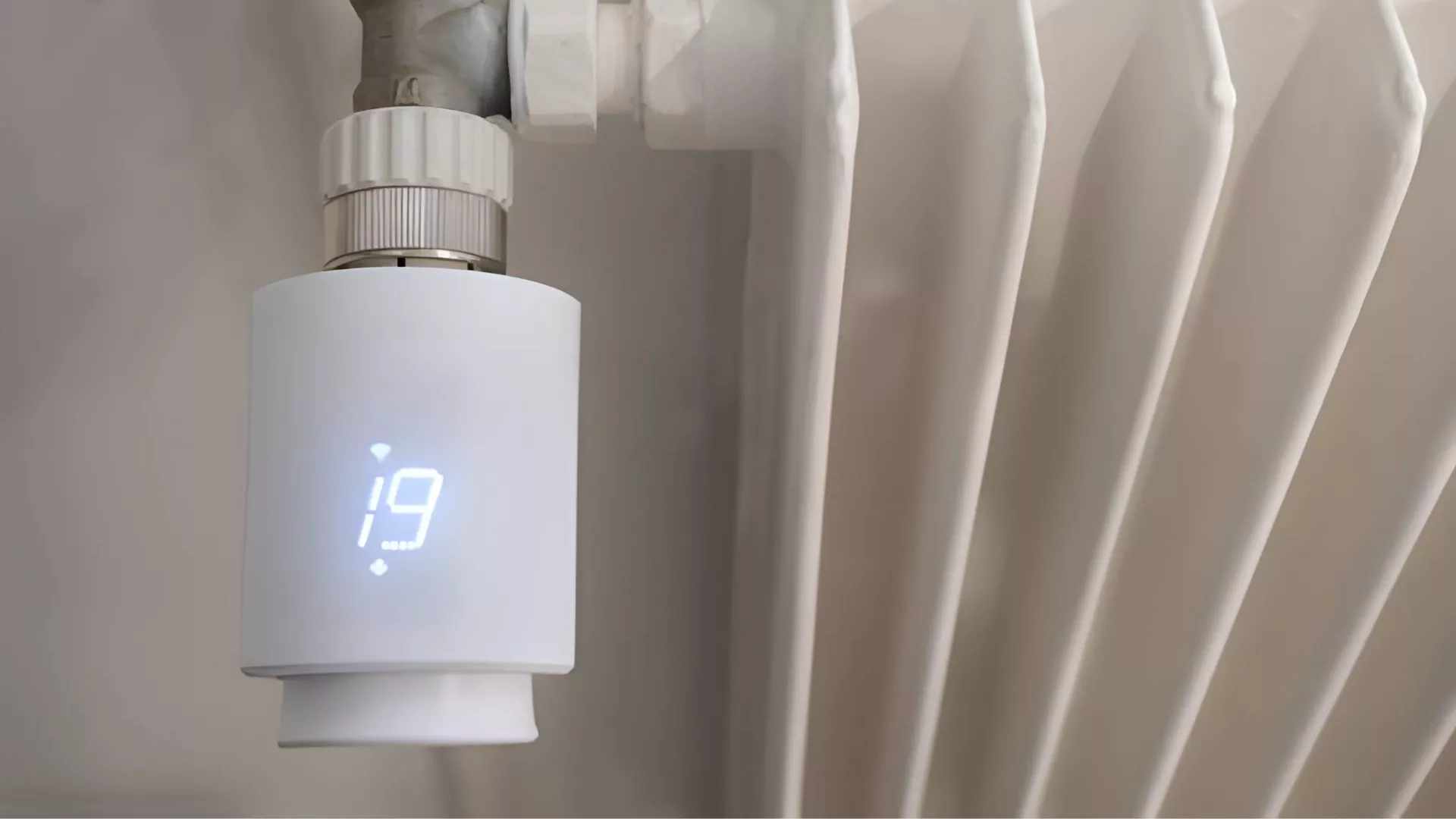
A smart TRV does everything a standard TRV does — but adds a layer of digital intelligence on top. Instead of just a dial, you get app control, scheduling, and even geofencing. This means your heating can automatically turn down when you leave the house and warm up again before you get back.
Smart TRV Pros and Cons
| ✅ Pros | ❌ Cons |
|---|---|
| Control from anywhere via app | Higher upfront cost |
| Scheduling and geofencing | Requires Wi-Fi or hub |
| Works with Alexa, Google Home | Needs battery replacement |
| Even greater energy savings | Slightly more complex setup |
| Works with all boiler types | App quality varies by brand |
Do Smart TRVs Work With Any Boiler?
Yes — and this is one of the biggest misconceptions people have. Smart TRVs still use the same mechanical valve body as a standard TRV. Therefore, they work with virtually all combi, system, and heat-pump boilers. The smart head simply replaces the standard dial head — no boiler upgrade needed.
“Smart TRVs represent the next logical step after standard TRVs. The combination of occupancy detection and remote scheduling can push energy savings well beyond what a mechanical valve alone can achieve.”
— Professor Robert Lowe, Energy and Buildings Research Group, University College London (UCL)
Real-World Energy Savings — What the Data Actually Shows
The Numbers That Matter
It is easy for manufacturers to make big claims. However, independent field studies back up the savings that TRVs deliver. Here is what the latest 2025 data actually shows:
| Metric | 2025 Value | Projected (2034–2035) |
|---|---|---|
| Global TRV Market Size | $3.8 billion | $6.4 billion (CAGR 5.9%) |
| Average Energy Savings | 18% on heating bills | Up to 30% when optimised |
| Savings Range (field studies) | 7–23% | Up to 30% with balancing |
| Typical Payback Period | 1.5–3 years | — |
| US TRV Market Size | $105.1 million | $156.9 million |
How to Maximise Your Savings
TRVs work best when combined with a few simple habits. Additionally, pairing them with proper system balancing can push savings toward the higher end of the range.
- 🌡️ Set bedrooms to 16–18°C (60.8–64.4°F) during the day
- 🛋️ Set living areas to 19–21°C (66.2–69.8°F) when occupied
- ❄️ Use the frost setting — around 5–7°C (41–44.6°F) — in unused rooms
- 🔧 Ask a heating engineer to hydraulically balance your system once TRVs are fitted
- 📱 Consider upgrading to smart TRVs for scheduling and geofencing benefits
Frequently Asked Questions About Thermostatic Radiator Valves
How does a thermostatic radiator valve work?
A temperature-sensitive capsule inside the TRV head expands or contracts with the room air temperature. This movement pushes or pulls a pin in the valve body to open or close hot-water flow. The whole process is completely automatic and mechanical — no electricity required.
Do I need thermostatic radiator valves?
Yes, if you have a radiator-based heating system and want lower bills and better comfort. TRVs are now required or strongly recommended under UK Part L and EU energy efficiency regulations for most homes. Furthermore, they pay for themselves in as little as 18 months.
Can thermostatic radiator valves save money?
Absolutely. Real-world data shows average savings of 18% on heating bills. Some homes see 20–30% savings when TRVs are combined with proper system balancing. Payback is typically 1.5–3 years — making them one of the fastest-returning home upgrades available.
What is the difference between a TRV and a normal radiator valve?
A normal manual valve is either fully open or closed by hand. A TRV, on the other hand, senses the actual room temperature and automatically adjusts the water flow. No manual tweaking is needed throughout the day.
Are TRVs easy to install?
Yes. Most homeowners replace a manual valve with a TRV in under 30 minutes per radiator using basic tools. You do not need to drain the whole system. However, if you are unsure, a qualified plumber can fit them quickly and affordably.
Do smart TRVs work with any boiler?
Yes. Smart TRVs use the same mechanical valve body as standard TRVs. Therefore, they are compatible with virtually all combi, system, and heat-pump boilers. Only the dial head is replaced with a smart head — no boiler changes needed.
Conclusion
Are Thermostatic Radiator Valves Worth It?
Without a doubt — yes. Thermostatic radiator valves are one of the simplest, most affordable, and most effective upgrades you can make to a radiator-based heating system. They give you room-by-room control, cut your heating bills by up to 18–30%, and pay for themselves in as little as 1.5 years.
Whether you go for a basic mechanical TRV or upgrade to a smart model with app control, the benefits are clear. You will use less energy, stay more comfortable, and put less strain on your boiler — all at the same time.
