
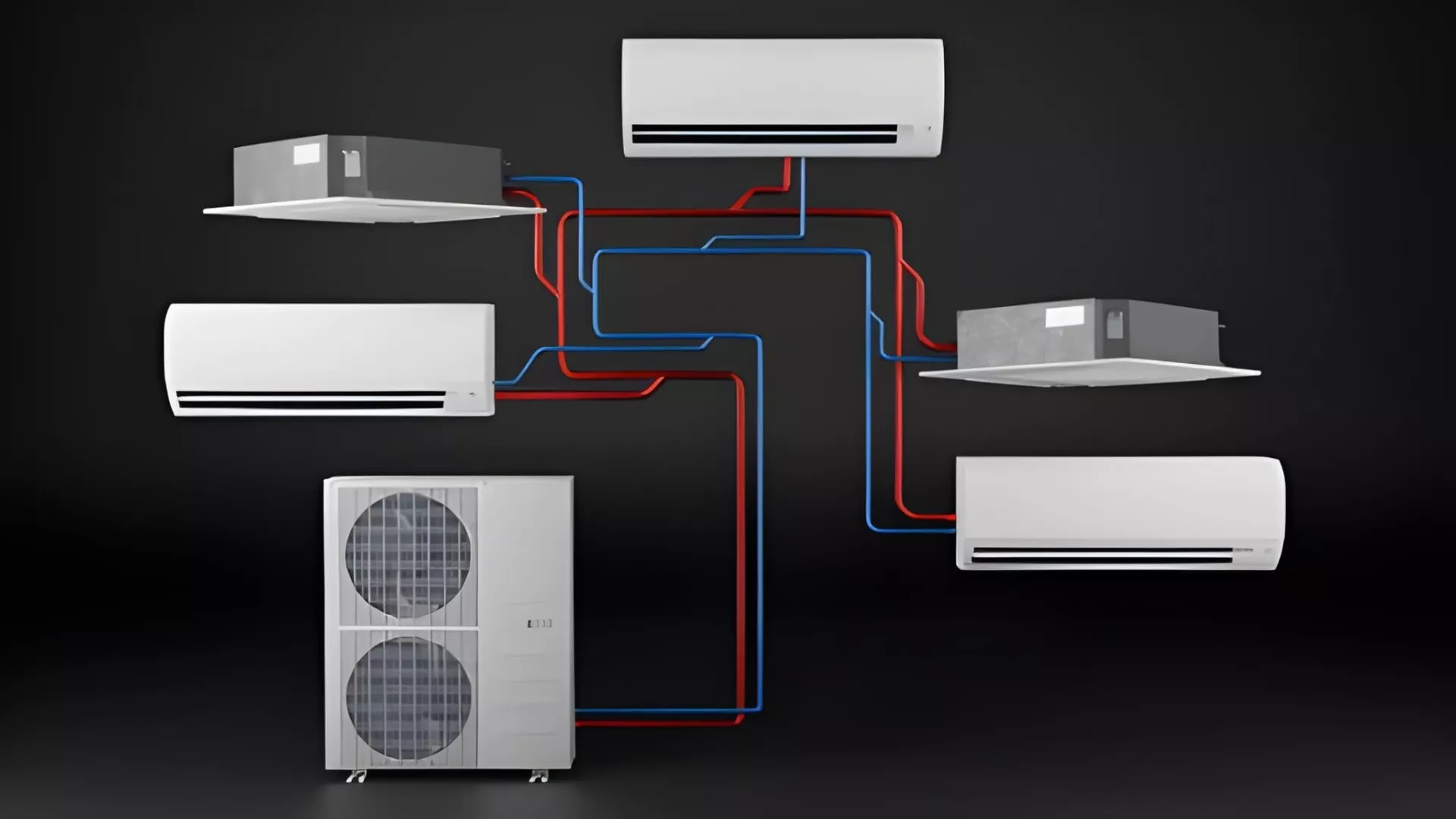
Quick Answer: HVAC controls are smart devices that manage your heating, cooling, and ventilation system. In short, they act as the brain of the system. First, sensors check the air. Next, a controller makes decisions. Then, actuators carry out the action. As a result, your space stays at the right temperature, humidity, and air quality.
🔑 Key Takeaways
- HVAC controls are the “brain” of any heating and cooling system.
- They have three main parts: sensors, controllers, and actuators.
- Smart HVAC controls can cut energy use by 10–30%.
- The global HVAC controls market is worth about USD $25–28 billion in 2025.
- Direct Digital Control (DDC) is today’s most common type.
- Servicing them once a year keeps everything running smoothly.
📊 HVAC Controls Market at a Glance
| Metric | Value |
|---|---|
| Global Market Size (2025) | ~USD $25–28 Billion |
| Projected Size (2030–2034) | USD $39–65 Billion |
| Growth Rate (CAGR) | 8.6% – 9.7% |
| Smart HVAC Energy Savings | 10% – 30% |
| U.S. HVAC Systems Market (2024) | ~USD $30 Billion |
What Are HVAC Controls?
A Simple Definition
HVAC stands for Heating, Ventilation, and Air Conditioning. So, HVAC controls are the parts that tell this system what to do and when to do it. For example, they decide when to turn the heater on. Likewise, they choose when to cool a room down to 22°C (72°F). In simple words, they keep your indoor air just the way you like it.
Why HVAC Controls Matter
Without controls, your HVAC system would just run all the time. As a result, you would waste lots of energy and money. Moreover, your home might feel too hot in the morning and too cold at night. Therefore, HVAC controls help in three big ways. First, they save energy. Second, they boost comfort. Third, they keep the air clean and healthy. In short, good HVAC controls make your space smart, safe, and easy to live in.
How Do HVAC Controls Work? (Step-by-Step)
The Simple 3-Step Process
HVAC controls follow a clear, repeating loop. Here are the three main steps:
- Sense: Sensors check things like temperature, humidity, or air quality.
- Decide: The controller compares the reading to your chosen setpoint.
- Act: Then it tells the equipment to turn on, turn off, or adjust.
A Quick Real-Life Example
Imagine you set your thermostat to 24°C (75°F). First, the sensor reads 27°C (80°F). Next, the controller sees that it is too warm. Then, it turns on the air conditioner. After a while, the room cools to 24°C (75°F). At that point, the controller switches the AC off. So, the loop simply repeats all day long.
“According to the U.S. Department of Energy, properly used HVAC controls and programmable thermostats can save the average household around 10% per year on heating and cooling costs.” — Industry guidance widely cited by ASHRAE and HVAC engineers.
Key Parts of an HVAC Control System
Every HVAC control system has four main parts. Each one plays a special role. Together, they make sure the whole system works well.
1. Sensors – The Eyes and Ears
Sensors measure things like temperature, humidity, pressure, airflow, or even CO₂ levels. In other words, they are the eyes and ears of the system. Without good sensors, the controller cannot make good choices.
2. Controllers – The Brain
The controller takes data from the sensors. Then, it compares it to your setpoint. After that, it decides what to do next. For example, a thermostat is a simple controller. On the other hand, a DDC unit is a much smarter one.
3. Actuators – The Muscles
Actuators are the muscles. They open valves, move dampers, and start fans. Basically, they carry out the controller’s orders.
4. Power Source
Lastly, every system needs power. Some use electricity. A few older ones use compressed air, also called pneumatic power.
Main Types of HVAC Control Systems
Not all HVAC controls are the same. In fact, there are several types. Some are old. Others are very modern. Below are the four main groups you should know.
Pneumatic Controls (The Old Style)
Pneumatic systems use compressed air to move actuators. They were popular many years ago. However, they are slowly being replaced. Still, you may find them in some older buildings.
Analog Electronic Controls
Next came analog electronic controls. They use simple electrical signals. As a result, they are more accurate than pneumatic ones. Yet, they cannot do fancy things like networking or remote access.
Direct Digital Control (DDC)
Today, DDC is the gold standard. It uses tiny computer chips to run the system. Therefore, it is fast, smart, and very precise. Moreover, you can program it and link many DDC units together. So, it is perfect for large buildings.
Smart Thermostats and Zoning
Finally, smart thermostats are the newest stars. They connect to Wi-Fi and your phone. Furthermore, zoning systems let you set different temperatures in different rooms. As a result, you save energy and stay comfortable.
📋 Quick Comparison Table
| Type | How It Works | Best For | Pros / Cons |
|---|---|---|---|
| Pneumatic | Compressed air | Old buildings | Simple but less accurate |
| Analog Electronic | Electrical signals | Small commercial | Better accuracy, limited features |
| DDC | Digital signals + chips | Modern buildings | Smart, precise, networkable |
| Smart Thermostat | Wi-Fi + apps | Homes & small offices | Easy to use, app-controlled |
Residential vs. Commercial HVAC Controls
How They Differ
Residential and commercial HVAC controls share the same basic idea. However, they are very different in size and power. For homes, controls are usually simple. On the other hand, commercial controls in big buildings are much more complex. Moreover, they often link many machines into one big network.
Side-by-Side Comparison
| Feature | Residential | Commercial |
|---|---|---|
| System Size | One home | Whole building |
| Main Type | Thermostat or smart thermostat | DDC / Building Automation System (BAS) |
| Zones | 1–3 zones | Many zones |
| Cost | $50 – $300 | $5,000+ |
| Who Installs | DIY or local pro | HVAC engineer |
Smart and IoT HVAC Controls (The New Wave)
What Makes Them “Smart”?
Smart HVAC controls connect to the internet. Therefore, you can run them from your phone or tablet. Moreover, many work with Alexa, Google Home, or Siri. In short, they bring HVAC into the smart-home world.
Cool Features You’ll Love
- Remote control: Change the temp from anywhere.
- Voice control: Just say “set to 22°C (72°F).”
- Occupancy sensing: The system shuts off when no one is home.
- Auto-learning: AI learns your daily routine.
- Predictive maintenance: It warns you before something breaks.
Why People Choose Smart HVAC Controls
Smart HVAC controls are easy to set up. In addition, they save money over time. As a result, more homes and offices use them every year.
Benefits of Modern HVAC Controls
Save Energy and Money
Modern HVAC controls cut energy use by 10–30%. As a result, your power bill drops a lot. Furthermore, the system often pays for itself in just 2–5 years.
Better Comfort and Air Quality
Good HVAC controls keep the room at exactly the right temp. Moreover, they manage humidity. They also bring in fresh air. So, the air feels cleaner and healthier.
Smarter Service Alerts
Many modern HVAC controls also warn you early. For example, they can tell you when a filter is dirty. Therefore, repairs cost less and the system lasts longer.
“Buildings with modern, well-tuned HVAC controls often use 15–23% less energy for cooling alone, based on studies cited by the U.S. Department of Energy.” — Industry research summary
HVAC Controls Maintenance and Troubleshooting Tips
Easy DIY Checklist
- ✅ Change air filters every 1–3 months.
- ✅ Wipe dust off sensors and thermostats.
- ✅ Check thermostat batteries each year.
- ✅ Look at wiring for loose or burnt parts.
- ✅ Watch for strange error codes on the screen.
Common Problems and Quick Fixes
| Problem | Likely Cause | Quick Fix |
|---|---|---|
| Wrong temperature reading | Dusty or broken sensor | Clean or replace it |
| AC keeps switching on/off | Wrong sensor location | Move sensor away from sun or vents |
| System won’t turn on | Dead battery or wiring fault | Replace battery, check wires |
| App won’t connect | Wi-Fi issue | Restart router and thermostat |
When to Call a Pro
Some jobs really need an expert. Therefore, call a pro once a year for a full check-up. Also call if you see error codes you don’t understand.
How to Choose the Right HVAC Controls
5 Questions to Ask Yourself
- How big is your space? A small flat needs less than a big office.
- What’s your budget? Smart thermostats start around $100.
- Do you want smart features? If yes, pick a Wi-Fi model.
- Do you need zoning? For multi-room homes, zoning is great.
- DIY or hire a pro? Big systems should always go to an HVAC expert.
Top Picks at a Glance
- For homes: A smart thermostat (Wi-Fi + app).
- For small offices: A programmable thermostat with zoning.
- For large buildings: A full DDC system linked to a BAS.
The Future of HVAC Controls
AI and Machine Learning
AI is changing HVAC controls fast. For example, smart systems now learn your habits. As a result, they keep you comfortable while using less power.
Green and Sustainable
Next, sustainability is a big trend. New HVAC controls work with solar panels and heat pumps. Furthermore, they help cities meet climate goals.
Tighter Integration
Finally, HVAC controls now talk to other smart systems. For example, lights, blinds, and HVAC can all work as one team.
Frequently Asked Questions (FAQ)
What is the difference between a thermostat and HVAC controls?
A thermostat is just one small part of HVAC controls. So, all thermostats are HVAC controls. However, not all HVAC controls are thermostats. The bigger system also includes sensors, controllers, and actuators.
What is the difference between pneumatic and DDC controls?
Pneumatic controls use compressed air. On the other hand, DDC controls use digital signals and tiny computer chips. Therefore, DDC is more accurate, faster, and easier to network.
Do smart HVAC controls really save money?
Yes, they do. Most homes save 10–30% on energy bills. Moreover, the system often pays for itself in just 2–5 years.
What is HVAC zoning?
Zoning lets you set different temps in different rooms. For example, you can keep the bedroom at 20°C (68°F) and the living room at 23°C (73°F). As a result, comfort goes up and bills go down.
How often should HVAC controls be serviced?
Once a year is usually enough for homes. However, large commercial buildings often need quarterly checks. In addition, always replace filters every 1–3 months.
Can I install HVAC controls myself?
You can install a basic smart thermostat on your own. However, big DDC or BAS systems need a trained HVAC engineer. So, when in doubt, call a pro.
Final Thoughts: Smart Comfort Starts with Smart Controls
HVAC controls might sound technical. But really, they are just the smart brain behind your heating and cooling. With the right HVAC controls, you save energy, stay comfy, and breathe cleaner air. Whether you pick a simple smart thermostat or a full DDC system, the key is matching the HVAC controls to your needs. In short, smart comfort always starts with smart HVAC controls.
