
⚡ Quick Answer: Non-Programmable vs Programmable Thermostats
| Feature | Non-Programmable | Programmable |
|---|---|---|
| Control | Manual only | Automated scheduling |
| Scheduling | None | Daily and weekly |
| Energy Savings | 0–5% (user-dependent) | 10–30% with proper use |
| Cost Range | $20–$50 | $50–$150 |
| Best For | Simple homes, irregular schedules | Consistent routines, energy savers |
The Core Difference in One Line
Simply put — a non-programmable thermostat does what you tell it, every time. A programmable thermostat does the work for you, automatically.
Non-Programmable vs Programmable Thermostats: Key Differences at a Glance
Side-by-Side Feature Comparison
Before choosing between the two, it helps to see exactly how they stack up against each other. Here is a full comparison table covering every key feature:
| Feature | Non-Programmable | Programmable |
|---|---|---|
| Control Type | Manual adjustments only | Automated scheduling with manual overrides |
| Scheduling | None | Multiple daily and weekly settings |
| Energy Efficiency | Relies entirely on user habits | Built-in setbacks for automatic savings |
| Interface | Basic dial or buttons | Digital, electromechanical, or hybrid |
| Extra Features | None | Maintenance alerts, energy tracking |
| Best For | Irregular schedules, simple systems | Consistent routines, energy-focused homes |
| Cost Range (2024) | $20–$50 | $50–$150 |
Sources: U.S. Department of Energy, Honeywell, ENERGY STAR (2024)
What This Means for You
The biggest takeaway here is this — if you are willing to set a schedule once and let the thermostat do the rest, a programmable model will almost always save you more money. However, if your daily routine is unpredictable, a non-programmable thermostat keeps things simple and stress-free.
Pros and Cons of Non-Programmable Thermostats
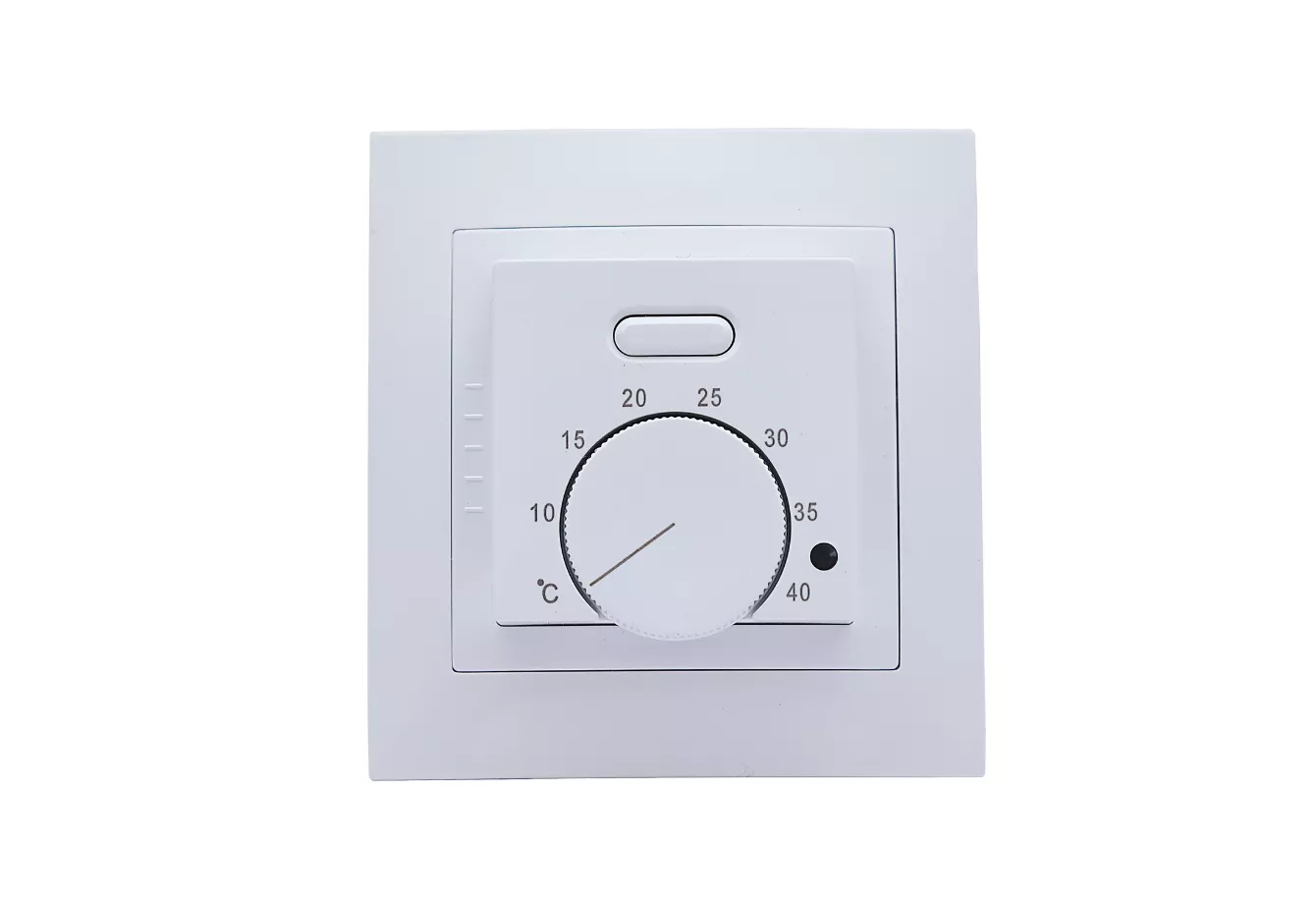
The Advantages
- ✅ Extremely easy to use — no programming or setup required at all
- ✅ Lowest upfront cost — starts at just $20, ideal for tight budgets
- ✅ Very reliable — fewer electronic parts means fewer things to go wrong
- ✅ Works without Wi-Fi or batteries in many cases — always dependable
- ✅ Perfect for basic HVAC systems like electric baseboard or steam heat
- ✅ Great for rentals — no complicated setup for tenants or landlords
The Disadvantages
- ❌ No automation — you must remember to adjust it every time you leave or sleep
- ❌ Higher energy bills over time — forgetting to turn it down wastes money daily
- ❌ No energy reports or usage tracking — no way to monitor your consumption
- ❌ No maintenance reminders — you will not be notified when filters need changing
- ❌ Relies entirely on your habits — savings depend 100% on how diligent you are
Who Is It Best For?
A non-programmable thermostat is a solid choice for renters, budget-conscious households, or anyone with an unpredictable daily schedule. It is also the right pick for homes with basic heating systems like electric baseboard heaters or steam radiators, where programmable models may not be compatible. If you prefer simplicity over automation, this is your thermostat.
Pros and Cons of Programmable Thermostats
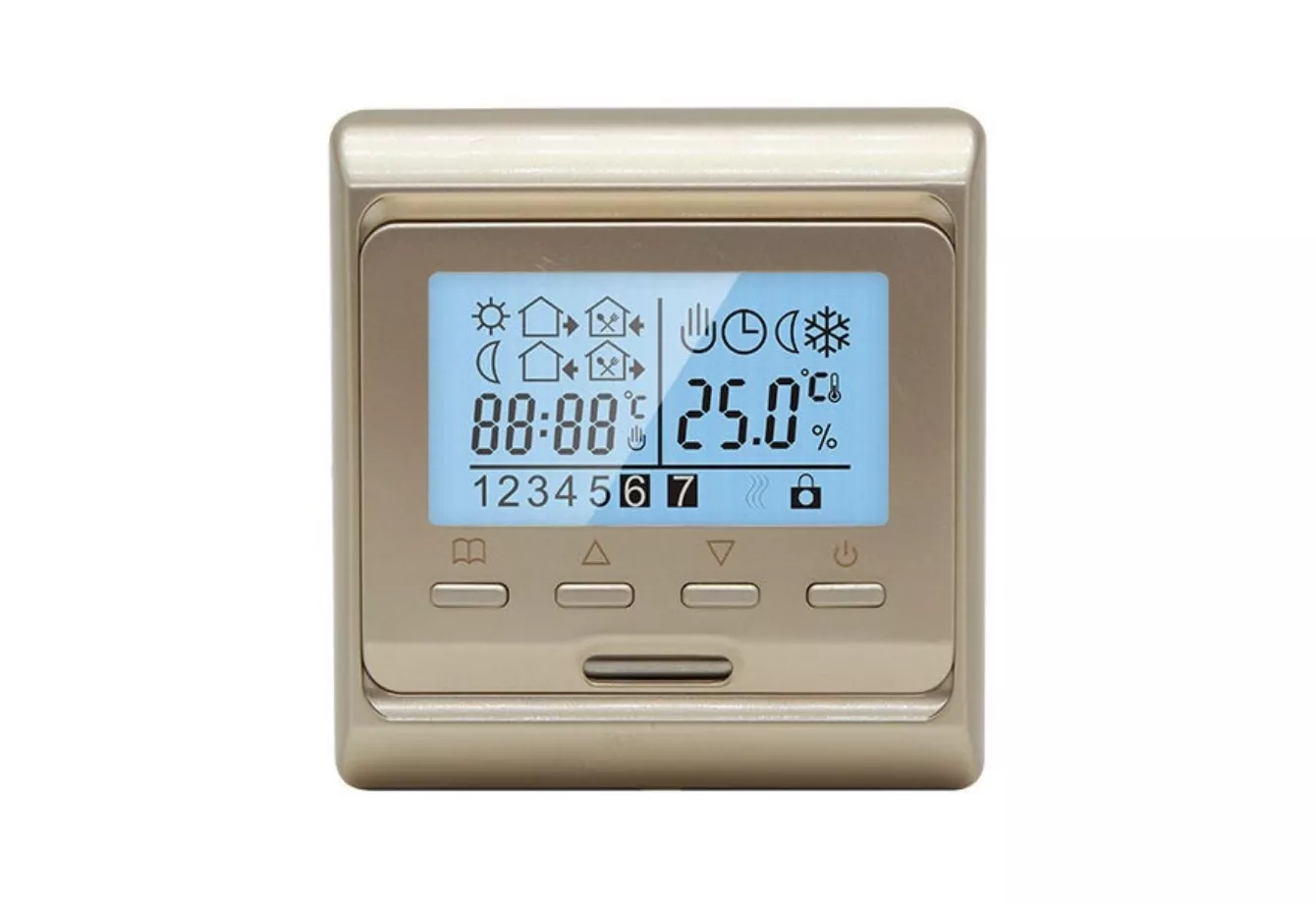
The Advantages
- ✅ Automatic energy savings — setbacks reduce HVAC runtime when you are away or asleep
- ✅ Customisable comfort — your home is always at the right temperature when you need it
- ✅ Saves up to 30% on heating and cooling bills when programmed correctly
- ✅ Maintenance alerts — reminds you when it is time to change your air filter
- ✅ Energy usage tracking — helps you understand and reduce your consumption
- ✅ Manual override available — you can still adjust it anytime without losing your schedule
The Disadvantages
- ❌ Steeper learning curve — programming can feel confusing at first for some users
- ❌ Higher upfront cost — $50 to $150 compared to $20 to $50 for manual models
- ❌ Less effective for irregular schedules — savings drop if your routine changes often
- ❌ Compatibility issues — may not work well with heat pumps, radiant floors, or steam heat
- ❌ Needs reprogramming after power outages or seasonal schedule changes
Who Is It Best For?
Programmable thermostats shine brightest for families or households with a consistent daily routine. If you leave for work at the same time each morning and come home at a similar time each evening, a programmable thermostat will automate your savings effortlessly. It is also a great fit for offices or any space with predictable occupancy patterns.
“Programmable thermostats are one of the most cost-effective upgrades a homeowner can make. When set up correctly, they deliver consistent savings year after year — without requiring any daily effort from the user.”
— Jennifer Thorne Amann, Buildings Program Director at the American Council for an Energy-Efficient Economy (ACEEE)
Energy Savings Potential: Real Numbers You Should Know
What the Data Actually Shows
Let us cut straight to the numbers. Energy savings are one of the biggest reasons people consider switching from a non-programmable to a programmable thermostat. Here is what real studies and trusted sources tell us:
- 🔵 The U.S. Department of Energy confirms you can save up to 10% per year on heating and cooling by adjusting your thermostat 7°C to 10°C (°F) for 8 hours daily
- 🟡 A 2024 Honeywell study of over 6,000 users found consistent scheduling delivered average savings of 22% on heating and 17% on cooling — around $204 per year
- 🟢 A 2023 field study in Texas showed occupancy-based programmable controls achieved 17.6% cooling savings — equal to 1,958 kWh in a single-family home over one cooling season
Savings Comparison Table
| Metric | Non-Programmable | Programmable |
|---|---|---|
| Average Annual Savings | Minimal ($0–$50) | Up to $204 per year |
| Percentage Savings on Bills | 0–5% (user-dependent) | 10–30% with proper use |
| Cooling Season Study Result | No data (manual only) | 17.6% savings (1,958 kWh) |
| ROI Timeline | No ROI mechanism | 1–2 years |
Sources: U.S. Department of Energy, Honeywell (2024), Texas field study (2023)
Which Thermostat Is Right for Your Lifestyle and Home?
A Simple Decision Framework
The best thermostat for your home depends on three key things — your daily routine, your HVAC system type, and your budget. Here is a simple way to figure out which one fits you best:
Choose a Non-Programmable Thermostat If…
- 🏠 You or someone in your household is home all day and can adjust manually
- 📋 Your schedule is irregular or unpredictable — shift workers, freelancers, retirees
- 💰 You need the lowest possible upfront cost right now
- 🔧 Your home uses baseboard electric heat, steam radiators, or a simple furnace
- 📵 You prefer no technology, no setup, and no complications whatsoever
Choose a Programmable Thermostat If…
- ⏰ You follow a consistent daily routine — same wake, leave, and return times
- 💡 You want to reduce your energy bills without thinking about it daily
- 👨👩👧 You have a family with predictable school or work schedules
- 🏢 You manage an office or commercial space with fixed operating hours
- 🌡️ You live in a climate with significant seasonal temperature swings
Compatibility Notes to Check First
⚠️ Important compatibility reminders before you buy:
- Programmable thermostats work best with forced-air systems (gas furnace, central AC)
- They are not ideal for radiant floor heating or steam systems — these respond slowly to temperature changes
- For heat pumps, make sure the programmable model is specifically rated for heat pump use
- Always check your system voltage — most homes use low-voltage (24V), but baseboard heaters use line-voltage
Installation Tips and Compatibility Considerations
Can You Install It Yourself?
The good news is that both thermostat types are generally straightforward to install. A non-programmable thermostat is almost always a simple DIY job that takes 15 to 30 minutes. A programmable thermostat follows the same basic steps but may need a little more care with wiring.
Step-by-Step Installation Guide
- Turn off the power to your HVAC system at the breaker box before touching anything
- Take a clear photo of your existing wiring before removing the old thermostat
- Label each wire with the letter shown on its terminal — this makes reconnection easy
- Mount the new thermostat base on an interior wall, away from windows, drafts, or direct sunlight
- Connect the matching wires to the correct terminals on the new thermostat
- Restore power and follow the on-screen or manual setup instructions
When Should You Call a Professional?
⚠️ Call a licensed HVAC technician if:
- Your system is a heat pump, multi-stage, or zoning system
- You are upgrading to a programmable model and do not have a C-wire available
- You are not comfortable working with electrical wiring at all
- You want to protect your HVAC system warranty — some require certified installation
Key Compatibility Checklist
- ✅ Confirm your system voltage — low-voltage (24V) for most central systems
- ✅ Count your thermostat wires — programmable models may need a C-wire for power
- ✅ Check if your system is single-stage or multi-stage — this affects which models work
- ✅ Place your new thermostat on an interior wall, away from heat sources and cold drafts for accurate readings
- ✅ Use the manufacturer’s online compatibility checker before purchasing
“One of the most common mistakes homeowners make is buying a thermostat without checking their system’s wiring first. A five-minute compatibility check before purchase can save you hours of frustration and unnecessary installation costs.”
— Charlie Stephens, Certified HVAC Master Technician and contributor to ACCA (Air Conditioning Contractors of America)
Frequently Asked Questions
1. Do programmable thermostats really save money?
Yes — when used correctly. Studies show savings of 10% to 30% on heating and cooling bills. The U.S. Department of Energy confirms that adjusting your thermostat by just 7°C to 10°C (°F) for 8 hours per day can save up to 10% annually. A 2024 Honeywell study found consistent users saved an average of $204 per year. However, savings drop significantly if the thermostat is not programmed properly or if your schedule changes often.
2. What are the disadvantages of a programmable thermostat?
The main drawbacks include a steeper setup process that can confuse some users, a higher upfront cost of $50 to $150, and compatibility issues with certain systems like heat pumps or steam radiators. Additionally, if your daily schedule is irregular, the preset programs may not align with your actual routine — which reduces their effectiveness and energy-saving potential.
3. Is it worth getting a programmable thermostat?
Yes — for most households with a predictable routine. With an ROI of just one to two years based on 10% to 20% energy savings, the upgrade pays for itself quickly. However, if your schedule varies greatly from day to day, a non-programmable thermostat may actually be the more practical and cost-effective choice for your situation.
4. What is the difference between a programmable and a smart thermostat?
A programmable thermostat uses schedules that you set manually in advance. A smart thermostat goes several steps further — it connects to Wi-Fi, learns your habits automatically, allows remote control via a smartphone app, and integrates with voice assistants like Alexa or Google. Smart models typically cost $100 to $300 but can deliver an additional 5% to 10% more savings on top of what a programmable thermostat offers.
5. Are non-programmable thermostats better for certain homes?
Absolutely yes. Non-programmable thermostats are the better choice for homes with irregular occupancy, basic heating systems like electric baseboard or steam radiators, or users who simply prefer a no-fuss, no-technology approach. They are also ideal for rental properties where simplicity and low maintenance matter most. They will not save you as much on energy, but they will never let you down with complicated settings or compatibility problems.
Conclusion: Making the Right Choice for Your Home
The Bottom Line
When it comes to the programmable vs non-programmable thermostat debate, there is no single right answer for everyone. Both types have a clear place depending on your lifestyle, budget, and home setup.
- 🔵 Pick a non-programmable thermostat if you value simplicity, have an unpredictable schedule, or need a budget-friendly option for a basic HVAC system
- 🟢 Pick a programmable thermostat if you follow a consistent daily routine and want to cut your energy bills by up to 30% without daily effort
Remember — even a small upgrade can make a big difference over time. A programmable thermostat costing $100 that saves you $204 per year pays for itself in under six months. Furthermore, with the global thermostat market growing rapidly, energy-efficient choices are becoming the new standard — not the exception.