
| ⚡ Quick Decision Guide | Central Air (Ducted) | Mini Split (Ductless) |
|---|---|---|
| Typical Install Cost | ✅ $6,000–$10,000 (with ducts) | ⚠️ $8,000–$15,000 (multi-zone) |
| SEER2 Efficiency | ⚠️ 14–20 | ✅ 20–30+ |
| Monthly Summer Bill (1,800 sq ft) | ⚠️ $110–$160/month | ✅ $60–$95/month |
| Duct Energy Losses | ⚠️ 20–30% wasted | ✅ Zero — no ducts |
| Room-by-Room Zoning | ⚠️ Whole house only | ✅ Per-room control |
| Best For | Existing ducted homes | No ducts, additions, zoning needs |
| 10-Year Total Cost | ⚠️ Higher operating costs | ✅ Often lower via energy savings |
Bottom line up front: If your home already has good ductwork and you want simple whole-house control — central air is a solid choice. If you want lower monthly bills, room-by-room comfort, or have no existing ducts — mini splits are the smarter long-term investment.
Central Air vs Mini Split: The Simple Breakdown for Homeowners
How Central Air Works — One System for the Whole House
Think of central air conditioning like a central water main for your house. One outdoor unit generates the cooling power. One indoor air handler pushes that cool air through a network of ducts — the same ducts your heating system likely uses — delivering conditioned air through vents in every room.
The result is whole-house cooling controlled by a single thermostat. Simple, familiar, and hidden from view. Every vent delivers the same temperature setpoint, regardless of whether a room is occupied or empty. Furthermore, if your home already has ductwork in good condition, swapping to a new central air system is relatively straightforward.
- 🏠 Key components: Outdoor compressor unit + indoor air handler + duct network + single thermostat
- ❄️ Cooling method: Forced air through ducts — whole house at one temperature
- 🔥 Heating: Usually requires a separate furnace — central air alone only cools
- 📍 Best suited for: Homes with existing ductwork in good condition
How Mini Splits Work — Room-by-Room Control Without Ducts
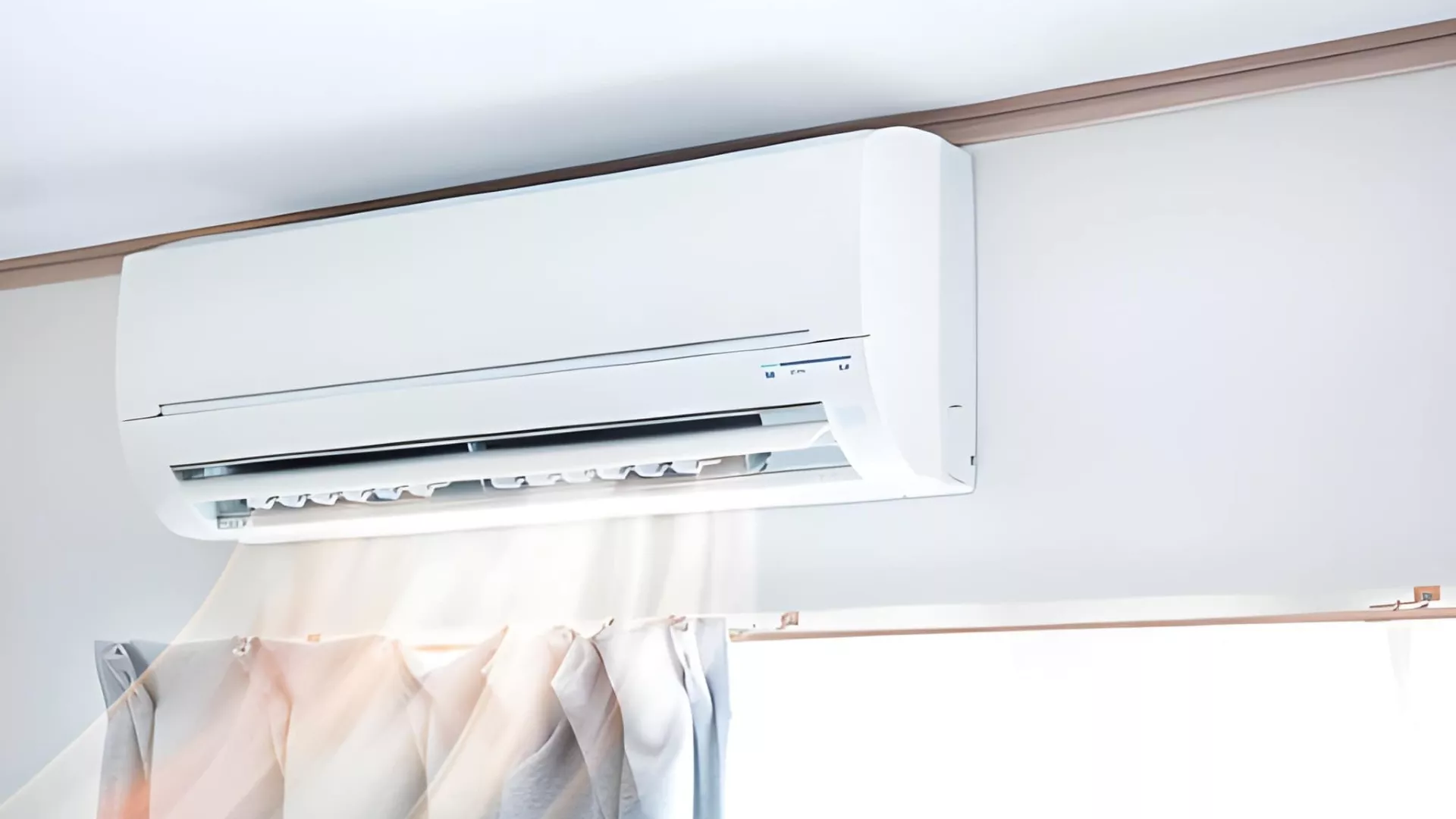
A mini split system works more like individual climate zones in a hotel. One outdoor compressor unit connects — via small refrigerant lines running through your walls — to individual indoor wall-mounted units in each room or zone. Each indoor unit has its own temperature control. Therefore, your bedroom can be set to 20°C (68°F) while your living room runs at 23°C (73°F) simultaneously.
Crucially, no ductwork is required. The refrigerant lines are slim enough to thread through a small hole in the wall — making mini splits ideal for older homes, room additions, and any space where running ducts would be impractical or prohibitively expensive.
- 🏠 Key components: Outdoor compressor + individual indoor wall units + refrigerant lines + per-room controls
- ❄️ Cooling method: Direct refrigerant-based cooling per zone — no ducts, no duct losses
- 🔥 Heating: Most 2026 mini splits are heat pumps — they both heat and cool efficiently down to -15°C (5°F) outdoors
- 📍 Best suited for: Homes without ducts, room additions, multi-zone comfort needs
“The fundamental shift we are seeing in residential HVAC is homeowners realising that ductless mini splits are not a compromise — they are often the superior technology. Higher efficiency, better zoning, and built-in heat pump capability make them the smarter choice for most new installations in 2026.”
Upfront Costs in 2026: Which One Won’t Break the Bank?
Central Air Installation Costs — When Ducts Are Already There
If your home already has functioning ductwork in good condition, central air is genuinely the more affordable upfront option. A straightforward system swap — new outdoor unit, new air handler, new thermostat — typically costs $6,000–$10,000 fully installed in 2026. Furthermore, the installation is usually completed in a single day with minimal disruption to your home.
However, the picture changes dramatically if your ducts need work. Leaky, poorly insulated, or absent ductwork adds significant cost:
- 💰 Central air with existing good ducts: $6,000–$10,000 installed
- 💰 Central air with duct repairs needed: $8,000–$14,000 installed
- 💰 Central air with brand-new ductwork: $15,000–$25,000 installed — a figure that fundamentally changes the cost comparison
Mini Split Installation Costs — When There Are No Ducts
A single-zone mini split — one outdoor unit, one indoor unit for a room or open-plan space — costs $2,000–$5,000 installed. A whole-home multi-zone system with three to five indoor units runs $8,000–$15,000 installed. That sounds more expensive than central air — until you factor in the no-duct scenario.
For a home without existing ductwork, mini splits are frequently the cheaper total option by a significant margin. Skipping $10,000–$15,000 in new ductwork changes the entire cost equation.
- 💰 Single-zone mini split: $2,000–$5,000 installed
- 💰 Multi-zone whole-home mini split: $8,000–$15,000 installed
- 💰 Versus central air + new ducts: $15,000–$25,000 — mini splits win clearly
Federal Rebates and Incentives — How Much Can You Actually Save?
💡 2026 Rebate Alert — Up to $8,000 Back
The Inflation Reduction Act’s High-Efficiency Electric Home Rebate Act (HEEHRA) offers up to $8,000 in rebates for qualifying heat pump mini split installations in 2026. Additionally, many utility companies stack their own rebates on top. After incentives, many whole-home mini split installs drop to $8,500–$12,000 net — closing the gap with central air significantly.
Energy Bills and Efficiency: How Much You’ll Actually Save Each Month
SEER2 Ratings Explained — What the Numbers Actually Mean for Your Wallet
SEER2 (Seasonal Energy Efficiency Ratio 2) is the current US efficiency standard for air conditioning systems. Simply put — the higher the SEER2 number, the less electricity the system uses to deliver the same amount of cooling. And the less electricity it uses, the lower your monthly bill.
- 📊 Central air SEER2 range (2026): 14–20 — most existing home systems sit at the lower end of this range
- 📊 Mini split SEER2 range (2026): 20–30+ — some premium models reach SEER2 42, the highest efficiency available in residential HVAC
- ⚙️ Why mini splits win on efficiency: Inverter-driven compressors run at variable speeds — slowing down when less cooling is needed rather than cycling on and off at full power like most central systems
Real Monthly Bill Comparison for an 1,800–2,000 Sq Ft Home
| Metric | Central Air (Ducted) | Mini Split (Ductless) | Mini Split Saving |
|---|---|---|---|
| SEER2 Rating | 14–20 | 20–30+ | Up to 2x more efficient |
| Monthly Summer Bill | $110–$160 | $60–$95 | 30–40% lower |
| Annual Energy Saving | Baseline | $300–$800/year | Pays back in 1–3 years |
| Duct Energy Loss | 20–30% wasted | Zero | Significant in older homes |
The Duct Loss Problem — Where 20–30% of Your Energy Bill Disappears
Here is a fact that surprises most homeowners: in a typical central air system, 20–30% of the cooling energy you pay for never reaches the living space. It escapes through leaky duct joints, poorly insulated duct runs in hot attics, and inefficient air distribution. You are essentially paying to cool your attic.
Mini splits have zero duct losses — refrigerant travels directly from the outdoor unit to the indoor wall unit with no energy wasted in transit. This single factor accounts for a significant portion of the 30–40% monthly bill difference between the two systems.
“Duct losses are the hidden tax on central air conditioning that most homeowners never think about. In a 20-year-old home with original ductwork, we routinely measure 25–35% energy loss before the conditioned air even reaches the room. Mini splits eliminate this entirely — it is one of the most compelling efficiency arguments for ductless systems.”
Comfort and Zoning: Why One System Ends Hot and Cold Room Arguments
The Hot Upstairs Problem — Why Central Air Struggles With Zoning
If you have ever lived in a two-story home with central air, you already know this problem. Upstairs bedrooms stay noticeably hotter than downstairs living areas — even when the thermostat is set to a comfortable temperature. This happens because hot air rises, upper floors absorb more solar heat through the roof, and a single thermostat located downstairs cannot account for the temperature difference.
The result is a familiar household frustration: someone is always too hot or too cold. Furthermore, to cool the upstairs adequately, you end up over-cooling the downstairs — wasting energy and money on rooms that did not need it.
- 🌡️ Typical temperature difference: Upstairs can run 3–6°C (5–10°F) warmer than downstairs in summer with central air
- 💸 The waste: Over-cooling downstairs to compensate adds unnecessary energy cost
- 😤 The frustration: One thermostat cannot satisfy everyone in a multi-story home simultaneously
How Mini Split Zoning Works — Set Different Temperatures in Every Room
Mini splits solve the zoning problem completely. Because each indoor unit operates independently with its own temperature control, you can set your upstairs bedroom to 20°C (68°F) for sleeping comfort while your downstairs living room runs at 23°C (73°F) for daytime activities — simultaneously, without compromise.
Furthermore, mini splits only condition occupied zones. If nobody is using the guest bedroom, that unit stays off — saving energy that a central system would waste cooling an empty room through its fixed duct network.
- ✅ Per-room temperature control: Every zone set independently via remote, app, or smart controller
- ✅ Only cool what you use: Unoccupied rooms stay off — no wasted energy on empty spaces
- ✅ No thermostat wars: Each person controls their own space — the most common household HVAC complaint eliminated entirely
Real Home Example — How One Family Cut Bills and Ended Thermostat Wars
A real-world example makes the numbers concrete. A family in a 2,000 sq ft two-story home in Georgia switched from central air to a four-zone mini split system. Their previous central air system struggled to keep upstairs bedrooms below 26°C (79°F) during summer afternoons — despite running constantly.
After switching to mini splits:
- 💰 Monthly summer bill: Dropped from $145 to $75 — a 48% reduction
- 🌡️ Upstairs bedroom temperature: Maintained at a comfortable 21°C (70°F) without over-cooling downstairs
- 😊 Thermostat conflicts: Eliminated — each family member controls their own room
- 📅 Payback period: At $70/month savings, the extra upfront cost recovered in approximately 28 months
Installation and Home Fit: Ducts or No Ducts?
Central Air Installation — What It Takes When Ducts Already Exist
When your home already has ductwork in good condition, central air installation is genuinely straightforward. An experienced HVAC contractor can typically complete a full system swap — outdoor unit, indoor air handler, refrigerant lines, and thermostat — in a single day. Disruption to your home is minimal and the result is invisible — vents in the ceiling or floor, nothing on the walls.
However, “good condition” is the critical qualifier. Before accepting a central air quote, always ask your contractor to inspect the existing ductwork. Specifically, check for:
- 🔍 Duct leakage: Joints, seams, and connections that have separated over time
- 🔍 Insulation condition: Duct runs in unconditioned attics or crawl spaces that lose significant energy
- 🔍 Sizing: Older duct systems often sized for lower-efficiency equipment — may restrict airflow with modern units
- ⚠️ If ducts need replacement: Add $5,000–$15,000 to your installation budget — at which point mini splits become highly competitive on cost
Mini Split Installation — How It Works Without Any Ductwork
Mini split installation is less invasive than most homeowners expect. The process involves mounting each indoor wall unit, drilling a small 7–8 cm (3-inch) hole through the wall for the refrigerant line set, and connecting to the outdoor compressor unit. A typical whole-home multi-zone installation takes one to two days — with no major construction, no duct chases, and no ceiling or wall demolition.
This makes mini splits particularly well-suited for:
- 🏚️ Older homes built without ducts: Radiator-heated homes, historic properties, and pre-1970s construction where adding ductwork would require major renovation
- 🏗️ Room additions and conversions: Garages, basements, sunrooms, and attic conversions where extending existing ducts is impractical
- 🏢 Open floor plan homes: Large open spaces where a single well-placed indoor unit covers the entire zone efficiently
Which Installation Is Right for Your Home? A Quick Checklist
🏠 Answer These Three Questions First
- Do you have existing ductwork in good condition? → Central air is likely your most cost-effective option
- Do you have no ducts, or ducts needing major repair? → Mini splits will almost certainly cost less in total
- Do you have rooms with persistent hot or cold spots? → Mini splits solve this problem permanently — central air cannot without expensive zoning additions
Maintenance, Lifespan and Long-Term Costs: What You’ll Really Pay Over 10 Years
Mini Split Maintenance — Simple Monthly Filter Cleaning and Annual Service
One of the most underrated advantages of mini splits is how straightforward their maintenance routine actually is. Because there are no ducts to clean, seal, or inspect, the ongoing upkeep is simpler than most homeowners expect — and much of it is genuinely DIY-friendly.
- 🧹 Monthly filter cleaning: Each indoor wall unit has a washable filter that slides out easily — rinse under water, dry, and replace. Takes under five minutes per unit.
- 🔧 Annual professional service: A qualified HVAC technician checks refrigerant levels, cleans coils, inspects electrical connections, and verifies system performance — typically $100–$150 per visit
- 📅 Lifespan: Mini splits consistently last 15–20+ years with proper maintenance — significantly longer than most central air systems
- ✅ No duct-related issues: No leaks to seal, no insulation to replace, no rodent damage to repair — a major hidden cost eliminated entirely
Central Air Maintenance — Filters, Ducts, and Annual Tune-Ups
Central air maintenance is equally manageable — but it involves more components and therefore more potential maintenance costs over time. Furthermore, the ductwork itself adds an ongoing maintenance dimension that mini split owners never face.
- 🔄 Filter replacement: Every 1–3 months depending on filter type and household — typically $15–$30 per filter. Easy to do yourself but easy to forget.
- 🔧 Annual professional tune-up: Covers refrigerant check, coil cleaning, electrical inspection, and airflow testing — typically $80–$150 per visit
- 🏗️ Duct cleaning: Recommended every 3–5 years — professional duct cleaning costs $300–$700 for a typical home
- 🔩 Duct repairs: Leaks, separated joints, and damaged insulation add $500–$2,000+ in repair costs over a system’s lifetime
- 📅 Lifespan: Central air systems typically last 12–15 years — meaning you may replace a central system once or twice during the lifetime of a single mini split installation
10-Year Total Cost of Ownership — Which System Actually Costs Less?
When you look beyond the upfront price tag and calculate genuine 10-year total cost of ownership, the picture shifts significantly in favour of mini splits — particularly for homes without existing ductwork or with older duct systems requiring ongoing repairs.
| Cost Factor (10 Years) | Central Air | Mini Split |
|---|---|---|
| Installation (avg, with ducts) | $8,000 | $11,500 (after rebates) |
| Energy Cost (10 summers) | $13,500–$19,200 | $7,200–$11,400 |
| Maintenance (10 years) | $2,500–$4,500 | $1,500–$2,500 |
| Estimated 10-Year Total | $24,000–$31,700 | $20,200–$25,400 |
| 10-Year Saving with Mini Split | — | $3,800–$6,300 |
“Homeowners consistently underestimate the 10-year cost of central air when duct losses, maintenance, and shorter system lifespan are factored in. When we run the full numbers, mini splits almost always deliver lower total cost of ownership — often by $4,000 to $6,000 over a decade.”
2025–2026 Market Trends: What Are Most Homeowners Choosing?
Where the Market Stands Today — Central Air Still Leads, But the Gap Is Closing
Central air conditioning still dominates the US residential market — but the numbers tell a story of rapid and accelerating change. Understanding where the market is heading helps you make a decision aligned with both current best practice and future home value.
- 🏠 Central air market share (2025–2026): Approximately 65% of residential installs — still the majority, largely driven by homes with existing ductwork
- 📈 Mini split market share (2025–2026): Approximately 35% and rising fast — up from under 20% just five years ago
- 📊 US mini split market CAGR: 4.9% — one of the fastest-growing segments in residential HVAC
- 🏗️ New construction trend: Mini splits and heat pump systems are increasingly specified as standard in new builds — particularly in energy-code-compliant states like California, Massachusetts, and New York
Why Mini Splits Are Growing Fast — The Drivers Behind the 4.9% CAGR
The shift toward mini splits is not accidental — it is being driven by a combination of economic, regulatory, and technological forces that are only accelerating in 2026.
- 💰 Federal and utility rebates: Up to $8,000 in IRA incentives plus utility stacking — dramatically reducing the upfront cost barrier that previously held mini splits back
- ⚡ Energy mandates: Tightening building energy codes in most US states are pushing minimum efficiency requirements beyond what many central air systems can meet cost-effectively
- 🌡️ Climate change: Longer, hotter summers are driving first-time AC purchases in northern states — where homes without existing ducts make mini splits the natural first choice
- 🏡 Housing stock: Millions of older US homes built without central air are entering the market for first-time cooling systems — mini splits serve this segment perfectly
“The mini split growth story is really three stories in one — energy savings driving upgrades, federal incentives making the economics work, and a huge inventory of older ductless homes finally getting their first air conditioning. All three trends are accelerating simultaneously in 2026.”
Pros, Cons and Real-Home Examples
Mini Split — Pros and Cons
Mini splits are the right choice for most homeowners making a fresh installation decision in 2026. However, understanding the complete picture — including genuine trade-offs — ensures you go in with realistic expectations.
- ✅ 30–40% lower monthly energy bills — the most impactful financial advantage
- ✅ True room-by-room zoning — set different temperatures in every space simultaneously
- ✅ Heats and cools — most 2026 models are heat pumps working efficiently down to -15°C (5°F) outdoors
- ✅ No ductwork required — ideal for older homes, additions, and open floor plans
- ✅ Quieter indoors — wall units operate at 19–26 dB — quieter than a whisper
- ✅ Longer lifespan — 15–20+ years vs 12–15 for central systems
- ✅ Up to $8,000 in federal rebates available in 2026
- ⚠️ Visible wall units — not everyone loves the aesthetic of wall-mounted indoor units
- ⚠️ Higher upfront cost for multi-zone — $8,000–$15,000 before rebates for whole-home coverage
- ⚠️ Multiple controls to manage — each zone has its own remote or app control
Central Air — Pros and Cons
Central air remains a perfectly valid choice in the right circumstances — particularly for homes with good existing ductwork where simplicity and hidden infrastructure are priorities.
- ✅ Hidden infrastructure — vents flush with ceiling or floor, nothing visible on walls
- ✅ Single thermostat simplicity — one control point for the whole house
- ✅ Lower upfront cost when existing ducts are in good condition ($6,000–$10,000)
- ✅ Familiar technology — every HVAC contractor can service it
- ✅ Strong resale appeal — buyers in ducted-home markets expect and understand central air
- ⚠️ 20–30% energy wasted through duct losses — a permanent efficiency penalty
- ⚠️ No room-by-room zoning — whole house cools at one temperature
- ⚠️ Higher monthly bills — $110–$160/month vs $60–$95 for mini splits
- ⚠️ Shorter lifespan — 12–15 years before replacement
- ⚠️ Expensive without existing ducts — new ductwork adds $10,000–$15,000 to install cost
Smart Thermostats and Upgrades: Making Either System Even Better
Smart Thermostats for Central Air — One Device, Whole-House Control
Central air and smart thermostats are a natural pairing. Because central air already operates as a single whole-house system, one smart thermostat controls everything — no complex multi-zone programming required. The result is a significant upgrade in comfort and efficiency with minimal installation complexity.
- 🌡️ Google Nest Learning Thermostat: Learns your schedule automatically and programs itself — delivers an average 10–12% cooling cost reduction in the first year
- 🌡️ Ecobee Premium: Includes room sensors that detect occupancy and temperature in multiple rooms — partially compensating for central air’s lack of native zoning
- 🌡️ Honeywell Home T10 Pro: Multi-room sensor support with geofencing — adjusts setpoints automatically when you leave and arrive home
- 📱 Remote access: Adjust your home temperature from anywhere via smartphone — pre-cool before arriving home without running the system all day
Wi-Fi Controllers for Mini Splits — App-Based Zoning From Your Phone
Mini split control has evolved significantly in 2026. Most new mini split systems include built-in Wi-Fi and dedicated smartphone apps — allowing full zone control from your phone without any additional hardware. Furthermore, universal Wi-Fi adapter accessories bring smart control to older mini split systems that lack native connectivity.
- 📱 Brand app control: Mitsubishi Kumo Cloud, Daikin Mobile Controller, LG ThinQ — each offers scheduling, temperature monitoring, and energy tracking per zone
- 🔗 Smart home integration: Most 2026 mini split Wi-Fi systems integrate with Amazon Alexa, Google Home, and Apple HomeKit — voice control for every zone
- 🔌 Universal adapters: Devices like Sensibo Sky or Cielo Breez add Wi-Fi smart control to any mini split with an IR remote — typically $50–$100 per unit
How Much Extra Can a Smart Thermostat Save You?
Adding smart control to either system delivers measurable additional savings on top of the baseline efficiency advantages already discussed.
- 💰 Smart thermostat additional savings: 10–20% extra reduction in HVAC energy costs — on top of whatever the underlying system already saves
- 📅 Scheduling: Avoiding unnecessary cooling during unoccupied hours is the single biggest source of smart thermostat savings
- 📍 Geofencing: Systems that detect when you leave home and automatically adjust setpoints save an average of $131–$145 per year (US DOE data)
- 🤖 AI learning: Nest and Ecobee learning algorithms optimise schedules over time — improving savings automatically without any manual programming
“Smart thermostat integration is the highest-ROI upgrade available for any HVAC system in 2026. Whether you have central air or mini splits, adding intelligent scheduling and occupancy detection typically delivers 10–20% additional savings with a payback period of under 12 months.”
Frequently Asked Questions About Mini Split vs Central Air
Are mini splits cheaper to run than central air?
Yes — significantly. Mini splits deliver 30–40% lower monthly energy bills on average ($60–$95 vs $110–$160 per summer month for a typical 1,800–2,000 sq ft home). The savings come from higher SEER2 efficiency ratings (20–30+ vs 14–20), inverter-driven variable-speed compressors, and zero duct energy losses. Most homeowners recover the extra upfront cost within 1–3 years through bill savings alone.
Which is better for a whole house: mini split or central air?
Both work effectively for whole-house cooling. Central air is better if you have good existing ductwork and want simple one-thermostat control. Mini splits are better for room-by-room comfort control, homes without ducts, and anyone prioritising long-term energy savings. Multi-zone mini split systems serve whole homes just as effectively as central air — with lower bills and better zoning.
Can mini splits replace central air completely?
Absolutely — thousands of homeowners make this switch every year. A properly sized multi-zone mini split system provides complete whole-home heating and cooling without any ductwork. Most 2026 mini splits are heat pumps that handle both heating and cooling efficiently down to -15°C (5°F) outdoors — replacing both your central AC and your furnace in a single system.
How much more expensive are mini splits to install?
For whole-home coverage, mini splits cost approximately $2,000–$5,000 more upfront than central air in homes with existing good ductwork. However, in homes without ducts, mini splits are frequently cheaper in total — central air plus new ductwork can reach $15,000–$25,000, while a complete multi-zone mini split system runs $8,000–$15,000 before rebates of up to $8,000.
Do mini splits heat and cool like central air?
Yes — and often better. Most 2026 mini splits are heat pump systems that provide both heating and cooling from a single installation. Unlike central air (which only cools and requires a separate furnace for heat), mini splits handle year-round comfort efficiently. Modern cold-climate mini splits maintain full heating performance down to -15°C (5°F) — suitable for most US climates.
Which lasts longer: mini split or central air?
Mini splits last significantly longer. With proper annual maintenance, mini splits typically deliver 15–20+ years of reliable service. Central air systems average 12–15 years before requiring replacement. This lifespan difference means you may replace a central system once or twice during the lifetime of a single mini split installation — a meaningful long-term cost consideration.
Mini Split or Central Air — Your Quick Decision Guide
The Honest Answer — It Comes Down to Your Home’s Situation
After comparing every key factor — upfront cost, monthly bills, efficiency, comfort, installation, maintenance, lifespan, and market trends — the honest verdict is this: mini splits are the smarter long-term choice for most homeowners making a fresh decision in 2026. However, the right answer for your specific situation depends on three factors: your existing infrastructure, your budget structure, and your comfort priorities.
The data is clear — mini splits deliver lower monthly bills, better zoning, longer lifespan, and superior efficiency. But central air remains a perfectly valid choice when good ductwork already exists and simplicity is the priority. Furthermore, with federal rebates closing the upfront cost gap significantly, the case for mini splits has never been stronger.
Choose Central Air If You Are…
- ✅ In a home with existing ductwork in good condition — the single biggest factor favouring central air
- ✅ Prioritising simplicity and hidden infrastructure — one thermostat, nothing on the walls
- ✅ Planning to sell soon — central air has broader buyer recognition in traditional ducted-home markets
- ✅ Working with a tight upfront budget where the $6,000–$10,000 install cost is decisive
- ✅ In a mild climate where air conditioning runs only a few months per year and efficiency differences matter less
Choose Mini Split If You Are…
- ✅ In a home without existing ductwork — mini splits are almost always cheaper in total when new ducts would otherwise be required
- ✅ Dealing with hot upstairs rooms, cold spots, or thermostat conflicts — zoning solves these permanently
- ✅ Focused on long-term energy savings — $300–$800 per year adds up to $3,000–$8,000 over 10 years
- ✅ Installing in a room addition, garage conversion, or basement where extending ducts is impractical
- ✅ Planning to replace your furnace too — a heat pump mini split handles both heating and cooling in one system
- ✅ Eligible for federal and utility rebates — up to $8,000 back makes the upfront cost significantly more competitive
