
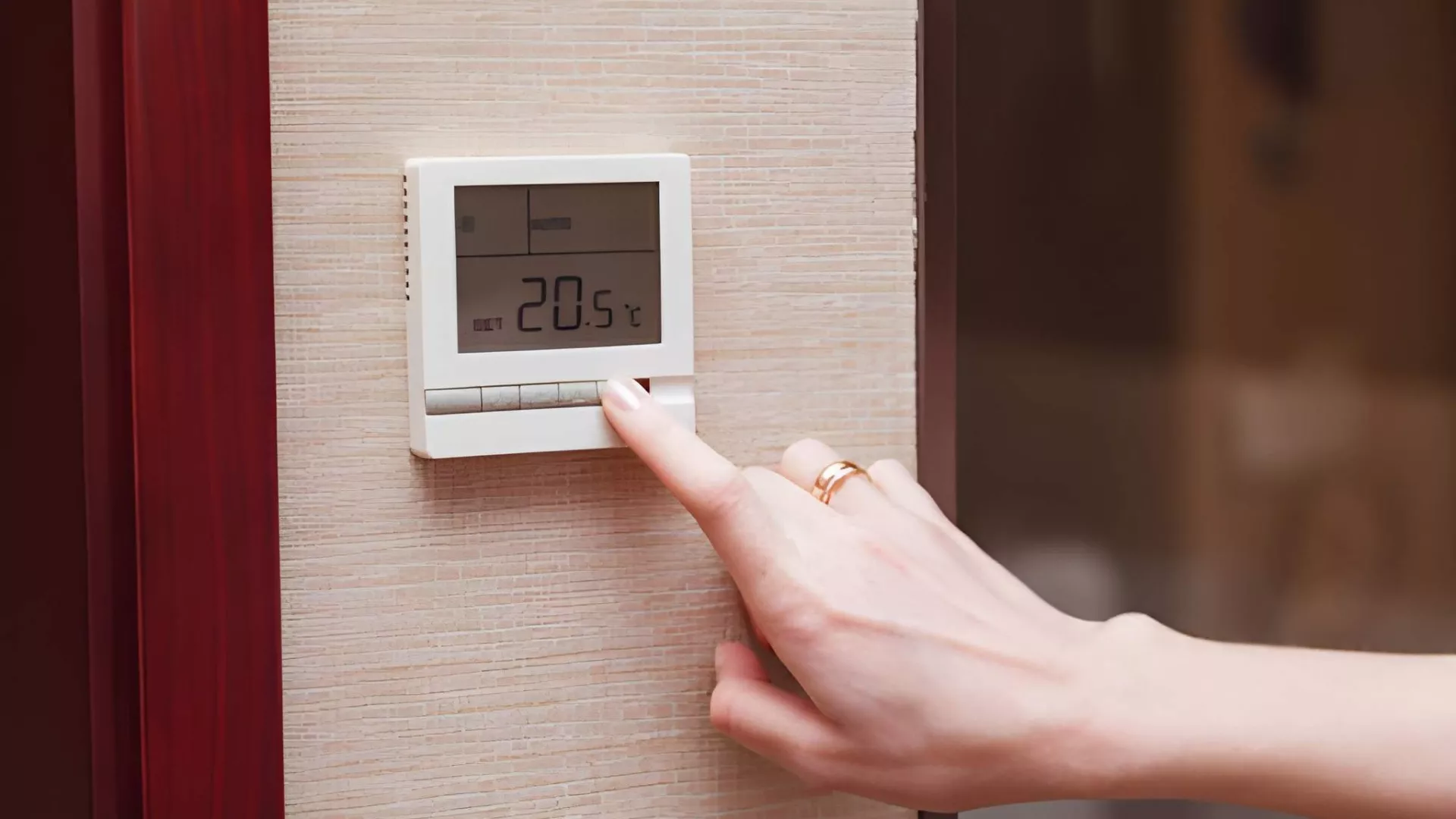
⚡ Quick Answer: What Is a Programmable Thermostat?
A programmable thermostat is a digital device that automatically adjusts your home’s temperature on a schedule you set — so you never have to think about it again. Set it once, and it handles the rest every single day.
| Feature | At a Glance |
|---|---|
| Cost Range | $25 – $150 |
| Potential Annual Savings | Up to 10% or ~$180/year (U.S. DOE) |
| Daily Scheduling Periods | 4 – 6 per day |
| Wi-Fi Required | No |
| Best For | Households with consistent daily routines |
What Is a Programmable Thermostat?
The Simple Definition
A programmable thermostat — also called a setback thermostat or clock thermostat — is a digital device that controls your home’s heating and cooling automatically. Instead of turning the temperature up or down yourself every day, you simply create a schedule once. The thermostat then follows that schedule on its own, every single day, without any further input from you.
Think of it like setting an alarm clock. You set it once, and it does its job automatically every morning. A programmable thermostat works the same way — but for your home’s comfort and energy use.
How It Differs From a Basic Manual Thermostat
A manual thermostat holds one temperature until you change it. That means you have to remember to turn the heat down every time you leave the house or go to bed. A programmable thermostat removes that responsibility entirely. It raises and lowers the temperature automatically based on the times and temperatures you have chosen in advance.
The 4 to 6 Daily Scheduling Periods
Most programmable thermostats divide your day into four to six time periods:
- 🌅 Wake — warm up the home before you get out of bed
- 🚗 Leave — lower the temperature while the house is empty
- 🏠 Return — warm back up before you arrive home
- 🌙 Sleep — lower again overnight while you rest
You set the temperature and time for each period. The thermostat handles everything else automatically — every single day.
How Does a Programmable Thermostat Work?
Reading and Executing Your Schedule
Once you enter your preferred temperatures and times, the thermostat stores your schedule in its memory. At each programmed time, it sends a signal to your HVAC system — telling it to turn on, turn off, or adjust its output to reach the target temperature. The process is smooth, automatic, and completely hands-free once set up.
Advanced digital models even use a PID controller — a smart calculation system that learns how long your home takes to heat or cool. This means the system starts a few minutes early so your home reaches the exact right temperature precisely on time, without overshooting.
The 7-Day Scheduling System Explained Simply
Most modern programmable thermostats offer a 7-day scheduling system. This means you can set a completely different schedule for each day of the week. For example:
- 📅 Monday to Friday — lower temperature during school and work hours
- 🛋️ Saturday and Sunday — keep it comfortable all day since everyone is home
Some models offer 5+2 scheduling (one setting for weekdays, another for weekends) or 5+1+1 (separate settings for Saturday and Sunday). Choose whichever matches your lifestyle best.
Manual Override and Hold Features
What if your plans change? No problem. You can always manually override the schedule at any time — for example, holding a higher temperature during a dinner party. Importantly, this does not erase your programmed schedule. Once the hold period ends, your thermostat simply returns to its normal routine automatically.
Key Features of Modern Programmable Thermostats
Scheduling and Control Features
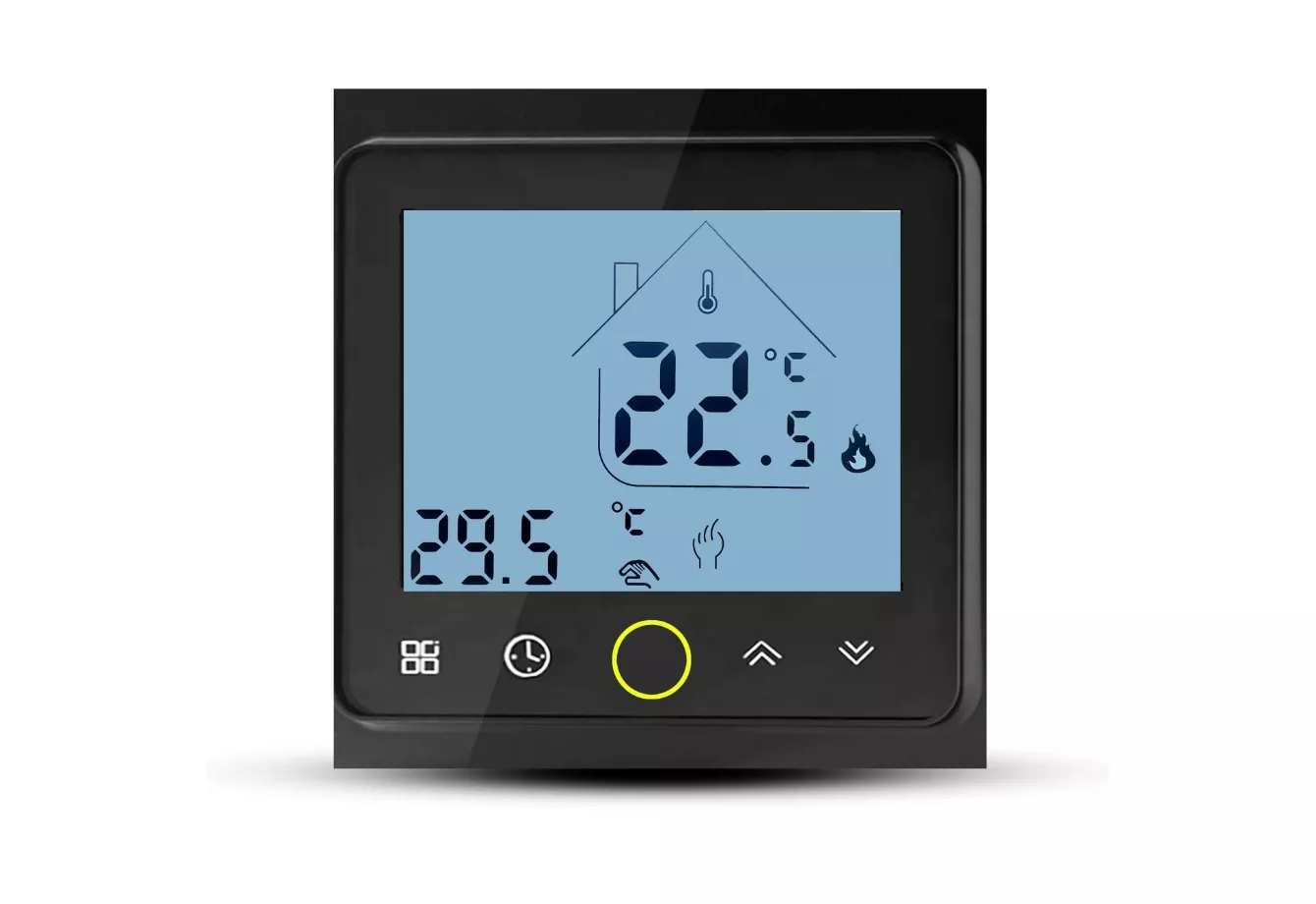
Today’s programmable thermostats come packed with features that make managing your home’s comfort easier than ever. Here are the most important ones to know about:
- 📅 5-2, 5-1-1, or full 7-day scheduling — choose the format that fits your weekly routine
- ⏰ 4 to 6 daily temperature periods — wake, leave, return, and sleep settings as a minimum
- ✈️ Vacation or away mode — holds a single energy-saving temperature while you travel
- 🔔 Filter-change reminders — alerts you when your air filter needs replacing
- 🔋 Battery backup — retains your program during power outages so you never lose your settings
Comfort and Compatibility Features
- 📱 Touchscreen or app control — available on Wi-Fi hybrid models for added convenience
- 💨 Fan circulation options — lets you run the fan independently of heating or cooling
- 🔧 Broad HVAC compatibility — works with most single-stage and multi-stage systems
- 🌡️ Heat pump compatibility — available on specially rated models with recovery algorithms
“The filter reminder and battery backup features alone make programmable thermostats worth it for most homeowners. These small details protect your HVAC system and keep your schedule running even when the power flickers.”
— Jennifer Thorne Amann, Buildings Program Director, American Council for an Energy-Efficient Economy (ACEEE)
Programmable vs Non-Programmable Thermostats: Key Differences
The Core Distinction
The biggest difference between these two types comes down to one word — automation. A non-programmable thermostat does nothing unless you physically change it. A programmable thermostat works on your behalf, every hour of every day, based on the schedule you created.
Here is a full side-by-side comparison to make the choice crystal clear:
| Feature | Non-Programmable | Programmable |
|---|---|---|
| Control Type | Manual only | Automated scheduling |
| Scheduling | None | 4–6 periods daily, 7-day options |
| Energy Savings | 0–5% (user-dependent) | Up to 10–30% with proper use |
| Extra Features | None | Filter alerts, battery backup, vacation mode |
| Cost Range | $20–$50 | $25–$150 |
| Best For | Irregular schedules, basic systems | Consistent routines, energy-focused homes |
Who Wins and When?
For most households, a programmable thermostat wins on value. However, if your schedule changes every day or you are home all the time, a non-programmable model keeps things simple and cost-effective. The key is matching the thermostat to your actual lifestyle — not just picking the most advanced option available.
Programmable vs Smart Thermostats: Which One Should You Choose?
Side-by-Side Comparison
| Feature | Programmable | Smart |
|---|---|---|
| Wi-Fi Required | No | Yes |
| Auto-Learning | No | Yes |
| Remote App Control | No (some hybrid models) | Yes — from anywhere |
| Geofencing | No | Yes |
| Energy Savings | Up to 10–30% | 8–23% (often higher) |
| Cost Range | $25–$150 | $80–$300+ |
Simple Decision Guide
Use this quick guide to decide which type is right for you:
- ✅ Choose programmable if — you have a consistent daily routine, do not need remote access, want a lower upfront cost, and prefer simplicity without relying on Wi-Fi
- ✅ Choose smart if — your schedule varies, you travel often, you want hands-off automation, or you are willing to pay more for maximum convenience and savings
How Much Can You Really Save? Energy Savings Data and Statistics
The Real Numbers Behind the Savings
Energy savings are the number one reason most people consider a programmable thermostat. So let us look at what the data actually says — not just marketing claims, but verified figures from trusted 2024–2026 sources.
| Setback Strategy | Temperature Change | Duration Per Day | Potential Annual Savings |
|---|---|---|---|
| Nighttime + Away (winter/summer) | 4–6°C (7–10°F) | 8+ hours | Up to 10% (U.S. DOE, 2026) |
| Consistent proper programming | Varies | Daily | ~$180/year (Consumer Reports) |
| Milder climates | Same | Same | Higher end of 5–15% range |
| Overall home energy bill impact | — | — | $100–$250/year depending on location |
Sources: U.S. Department of Energy (2026), Consumer Reports, ENERGY STAR
An Important Warning About Real-World Savings
⚠️ Savings are not automatic. EPA reviews show that up to 70% of users never fully program their thermostats — resulting in little or no savings at all. The 10% figure only holds when the thermostat is correctly programmed and the schedule is actually followed. Set it up properly from day one and you will see real results.
Pros and Cons of Programmable Thermostats
The Advantages
- ✅ Reliable energy savings — up to 10–30% on heating and cooling bills when used correctly
- ✅ Lower cost than smart models — $25 to $150 versus $80 to $300+ for smart thermostats
- ✅ No Wi-Fi dependency — works perfectly even without an internet connection
- ✅ Easy for non-tech users — straightforward buttons and clear on-screen menus
- ✅ Long lifespan — most programmable thermostats last 10 to 15 years with minimal maintenance
- ✅ Consistent comfort — your home is always at the right temperature when you need it
The Disadvantages
- ❌ Requires initial programming effort — takes time to set up correctly from the start
- ❌ No automatic learning — it only does exactly what you tell it, nothing more
- ❌ No remote access — you cannot adjust it from your phone while away from home
- ❌ Less effective for irregular schedules — savings drop if your routine changes often
- ❌ Needs reprogramming after power outages or seasonal schedule changes
The Overall Verdict
For most households with a predictable routine, the pros clearly outweigh the cons. A programmable thermostat is one of the most cost-effective home upgrades available — with a payback period of under two years for the majority of users. The only real risk is buying one and never setting it up properly.
How to Install and Program a Programmable Thermostat
Step-by-Step Installation Guide
Most homeowners can install a programmable thermostat themselves in 15 to 30 minutes. Here is how to do it safely:
- Turn off the power to your HVAC system at the breaker box before touching anything
- Remove the old thermostat and take a clear photo of the existing wiring before disconnecting
- Label each wire with the letter shown on its terminal — common wires are R, W, Y, G, and C
- Mount the new base plate on the wall and connect each wire to its matching terminal
- Install batteries if required, then snap the faceplate onto the base
- Restore power at the breaker and follow the on-screen setup prompts
Step-by-Step Programming Guide
- Set the current date and time — this is the foundation of your schedule accuracy
- Choose your schedule type — 7-day, 5+2, or 5+1+1 based on your weekly routine
- Set the temperature for each period — wake, leave, return, and sleep at minimum
- Save your settings and run the system for one full day to verify it works correctly
- Adjust if needed — fine-tune temperatures after the first week based on comfort feedback
DIY vs Professional Installation Cost
- 🔧 DIY installation — cost of the thermostat only ($25–$150)
- 👷 Professional installation — $160 to $340 total including labour (2026 national average)
⚠️ Call a licensed HVAC technician if:
- Your system is a heat pump, multi-stage, or zoning system
- You do not have a C-wire and are unsure how to add one
- You are not comfortable working with electrical wiring
- You want to protect your HVAC system warranty
Tips to Maximize Savings and Avoid Common Mistakes
Actionable Tips for Maximum Savings
- 🌡️ Set your winter away and sleep temperatures 4–6°C (7–10°F) lower than your comfort temperature
- ☀️ Set your summer away and sleep temperatures 4–6°C (7–10°F) higher than your comfort temperature
- ⏰ Program at least 4 periods per day — wake, leave, return, and sleep as a minimum baseline
- 📅 Use 7-day scheduling if your weekend routine differs from your weekdays
- ✈️ Use vacation mode when travelling — hold a single energy-saving temperature the whole time
- 🌬️ Place your thermostat on an interior wall away from windows, doors, direct sunlight, and lamps
Common Mistakes to Avoid
- ❌ Using permanent hold mode — this overrides your schedule and eliminates all automated savings
- ❌ Setting too many manual overrides — defeats the purpose of having a programmable thermostat
- ❌ Never updating the schedule after seasonal changes or lifestyle shifts
- ❌ Placing the thermostat near heat sources — this causes false readings and inefficient operation
- ❌ Skipping the battery check — low batteries can cause lost programs and missed schedules
“The single biggest mistake homeowners make with programmable thermostats is setting them up once and never revisiting the schedule. Seasonal adjustments alone — summer versus winter setpoints — can double your annual savings with just five minutes of effort.”
— Charlie Stephens, Certified HVAC Master Technician and contributor to ACCA (Air Conditioning Contractors of America)
Buying Guide — How to Choose the Right Programmable Thermostat
What to Look For Before You Buy
- ✅ HVAC compatibility — check your wire count and system type before purchasing anything
- ✅ Number of daily periods — choose a model with at least 4 periods per day for meaningful savings
- ✅ 7-day scheduling flexibility — essential if your weekend routine differs from weekdays
- ✅ ENERGY STAR certification — confirms independently verified energy efficiency standards
- ✅ Battery backup — protects your program during power outages
- ✅ Clear display and intuitive interface — you need to be able to program it without frustration
Top Brands to Consider in 2026
- 🥇 Honeywell Home — industry leader with the widest range of programmable models and broad compatibility
- 🥈 Emerson — reliable, affordable, and excellent for straightforward installations
- 🥉 Keemeet — great budget option with solid scheduling features for basic HVAC systems
Budget Breakdown by Tier
- 💲 $25–$50 — basic programmable models, 5+2 scheduling, ideal for simple systems
- 💲💲 $50–$100 — mid-range models, 7-day scheduling, touchscreen display, filter reminders
- 💲💲💲 $100–$150 — premium programmable models, advanced scheduling, energy tracking, broader compatibility
Frequently Asked Questions
1. How does a programmable thermostat work?
A programmable thermostat stores a temperature schedule in its memory. At each programmed time, it signals your HVAC system to turn on or off to reach your target temperature automatically. Most models offer 4 to 6 daily periods — wake, leave, return, and sleep — and a 7-day scheduling system so weekdays and weekends can have completely different settings. Advanced models even learn how long your home takes to heat or cool, starting the system early so the temperature is perfect exactly when you need it.
2. How much does a programmable thermostat save on energy bills?
When used correctly, a programmable thermostat can save up to 10% per year on heating and cooling costs — around $180 annually based on Consumer Reports 2026 data. The U.S. Department of Energy confirms that setting back your temperature by just 4–6°C (7–10°F) for 8 or more hours per day delivers consistent savings. However, savings only happen when the thermostat is properly programmed and the schedule is actually followed every day.
3. Are programmable thermostats worth it?
Yes — for most homes with a predictable routine. With a device cost of $25 to $150 and annual savings of up to $180, most households reach their payback point in under two years. After that, every dollar saved goes straight back into your pocket year after year. The only exception is households with highly irregular schedules — in that case, a smart thermostat with geofencing may deliver better real-world results.
4. What is the difference between a programmable and a smart thermostat?
A programmable thermostat follows a fixed schedule that you set manually. A smart thermostat goes further — it connects to Wi-Fi, learns your habits automatically, uses geofencing to detect when you leave or arrive home, and lets you control everything from a smartphone app anywhere in the world. Smart models cost $80 to $300 or more but can deliver an additional 5% to 10% savings on top of what a programmable thermostat offers. Choose programmable for simplicity and lower cost. Choose smart for maximum automation and convenience.
5. Can programmable thermostats be used with heat pumps?
Yes — but you must choose the right model. Standard programmable thermostats can trigger inefficient backup electric heat in heat pump systems during large temperature setbacks. Always look for a programmable thermostat that is specifically labelled as heat pump compatible. These models use special recovery algorithms that bring the temperature up gradually, avoiding the need for costly backup heat and keeping your system running efficiently all year round.
Conclusion: Is a Programmable Thermostat Right for Your Home?
The Bottom Line
A programmable thermostat is one of the simplest, most affordable, and most effective upgrades you can make to your home’s heating and cooling system. It removes the daily hassle of manual adjustments, keeps your home comfortable around the clock, and — when set up correctly — delivers real, measurable energy savings year after year.
Here is a quick recap to help you decide:
- 🔵 Choose a programmable thermostat if you have a consistent daily routine, want reliable savings without smart-home technology, and prefer a lower upfront cost
- 🟢 Consider a smart thermostat if your schedule is unpredictable, you travel frequently, or you want hands-off automation with remote app control
- ⚪ Stick with a non-programmable thermostat only if you are home all day or have a basic heating system that is not compatible with scheduling features